

Intumescent Coatings for Passive Fire Protection in Coastal Buildings
February 6, 2026
Intumescent coatings are becoming a critical component of passive fire solutions and protections strategies in modern coastal construction. As buildings along coastlines face a combination of elevated fire risk, harsh marine environments and demanding performance standards, our team at IECC is seeing a clear shift towards solutions that provide fire resistance and long-term durability. This article explores how intumescent technologies function as part of a holistic fire safety approach in coastal buildings, how they interact with structural steel and other substrates and how they perform under exposure. You will gain insight into the science behind intumescent reactions, the different product types available and the practical considerations that influence specification.
For developers, designers, asset managers and contractors, understanding the capabilities and limitations of intumescent coatings is directly linked to life safety compliance and asset performance. You will know what to expect, why intumescent coatings are suited to coastal applications and how informed choices at the specification stage can reduce lifecycle costs.
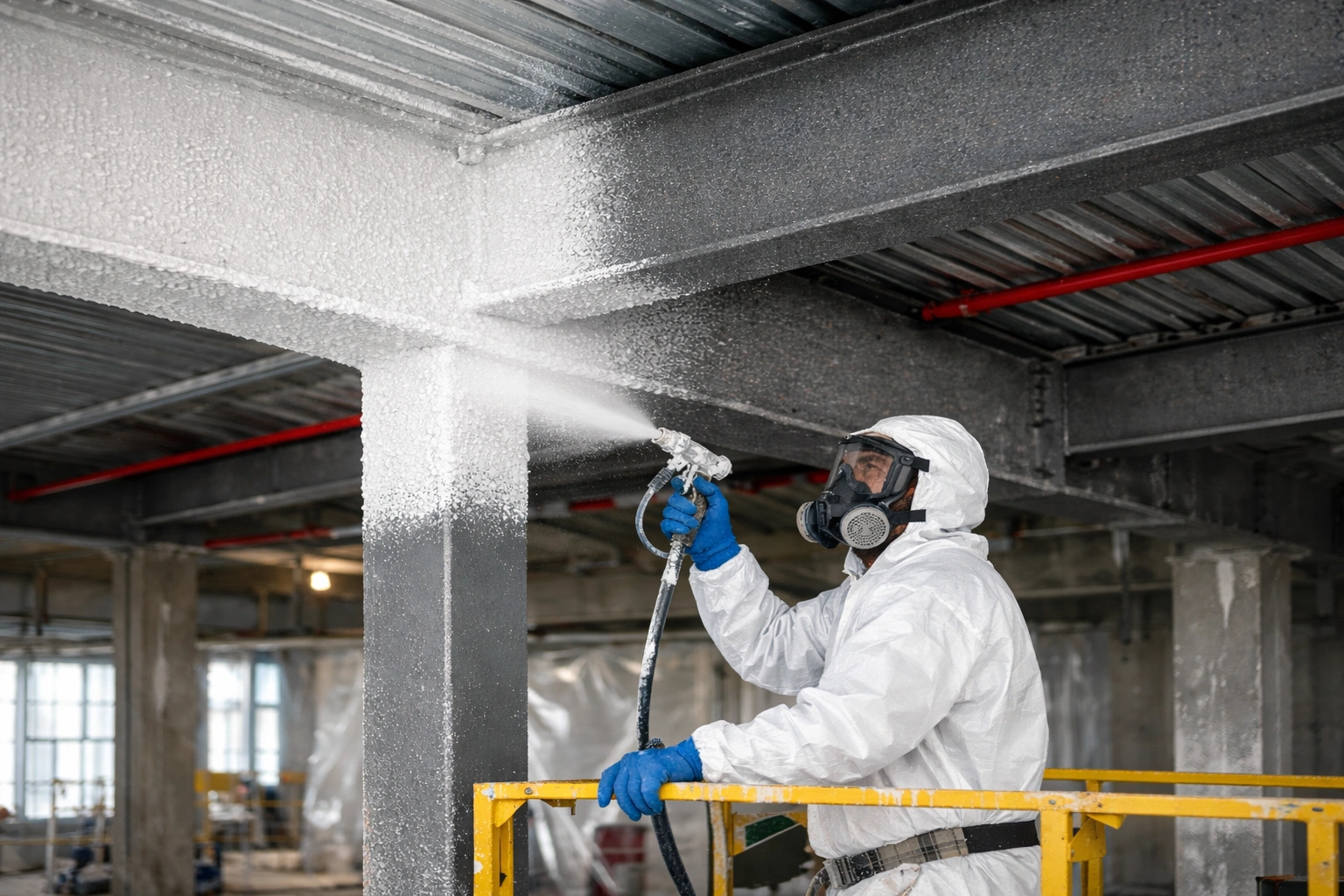
Intumescent coatings form a protective barrier around structural elements when exposed to high temperatures. For coastal buildings where evacuation routes may be limited and corrosion is a constant concern, these coatings help keep critical structural steel and other substrates cooler for longer, so occupants have more time to escape and fire services have more time to respond.
Rather than stopping a fire at its source, intumescent coatings slow the rate at which heat penetrates key components, such as beams, columns and connections. This delay is what passive fire protection is designed to achieve, and it is central to meeting modern fire resistance ratings in coastal environments.
Under normal conditions, intumescent coatings look and perform like a conventional paint system. When the surface temperature reaches roughly 200 to 250°C, the coating starts to react. Chemical ingredients such as binders, blowing agents and carbon donors activate in sequence, causing the film to expand up to 20 to 50 times its original thickness.
This expanded layer forms a stable insulating char that adheres to the substrate. The char has very low thermal conductivity, so it slows heat transfer to the underlying steel or other protected material. As a result, the steel heats far more slowly than it would if it were unprotected, which helps it maintain its load‑bearing capacity during the critical early stages of a fire.
Structural steel begins to lose strength significantly from about 500°C and can fail rapidly if not protected. Building codes typically require that key structural elements achieve fire resistance ratings of 30, 60, 90 minutes or more, depending on occupancy and height. Intumescent coatings are engineered to provide this protection without adding weight or bulk.
By controlling the thickness of the applied coating, we can match the required fire rating to the actual steel section size and configuration. Thicker or more vulnerable sections receive higher dry film thickness to deliver longer protection. In a coastal building, this is particularly important for:
The coating does not extinguish the fire, but it prevents premature structural collapse, which is the core purpose of passive fire protection.
In coastal locations, salt‑laden moisture and ultraviolet exposure accelerate corrosion and degrade conventional coatings. Intumescent systems are typically part of a multi‑layer build‑up that combines fire and corrosion protection. A compatible primer protects the steel from rust and a tough topcoat offers durability against weathering and UV.
This integrated system allows coastal buildings to meet fire and durability requirements without resorting to bulky encasements or heavy concrete. When properly specified and maintained, the intumescent layers continue to provide reliable passive fire protection for the design life of the structure, even in harsh marine environments.
Intumescent coatings offer a different approach to passive fire protection compared to traditional systems such as concrete encasement, fireproof boards and spray-applied fire-resistive materials. For coastal buildings where space, appearance and exposure to salt-laden air are critical, understanding these differences helps designers and owners select the most suitable solution.
Traditional systems remain effective for many applications, but they can be bulky, visually intrusive and vulnerable if not detailed correctly in aggressive environments. Intumescent coatings provide fire resistance in a much thinner profile and can be engineered to withstand coastal conditions while still meeting code requirements for structural fire protection.
Traditional methods maintain structural integrity by providing thick, non-combustible insulation around the member. Concrete jackets or dense board systems perform reliably but add weight and can be difficult to install around complex steel geometries.
Intumescent coatings react in fire and swell to many times their original thickness to form an insulating char layer. This slows heat transfer to the steel or substrate, so load-bearing capacity is maintained. Properly tested and certified systems achieve comparable ratings to concrete or board encasement on steelwork while using millimetres instead of centimetres of material. For coastal buildings, reducing the added dead load can be a key advantage.
Traditional encasement often alters the architectural intent. Concrete wraps obscure steel profiles and increase member size, which can reduce usable floor area and ceiling height. Board systems can create visible joints and require additional framing or fixings, which introduce more corrosion-prone interfaces in marine air.
Intumescent coatings follow the shape of the steel or substrate, so architects can keep slender exposed steelwork in lobbies, balconies and glazed coastal façades. The smooth finish can be overcoated with protective or decorative topcoats in a wide range of colours. This combines fire protection with design flexibility and an easier integration of services.
In marine climates, traditional materials can be robust but not maintenance-free. Concrete jackets can crack if detailing for movement and chloride exposure is inadequate, allowing moisture ingress and corrosion of embedded steel. Board systems rely on mechanical fixings and joints that must remain sealed against wind-driven salt spray.
Intumescent systems designed for coastal use are applied over carefully prepared and primed steel with specified anti-corrosion primers and durable topcoats. When correctly specified, they provide a combined barrier to chlorides and ultraviolet exposure while also delivering fire performance. Inspection and maintenance are relatively straightforward because defects are visible and can be repaired without dismantling large sections of the inclosure. This can result in lower lifecycle disruption compared with replacing damaged boards or repairing cracked concrete in exposed marine locations.
Coastal environments introduce a set of aggressive conditions that can shorten the life of passive fire protection systems if they are not correctly specified and maintained. Intumescent coatings that perform well inland can fail prematurely on waterfront or near‑shore projects when exposed to salt‑laden air, high humidity and intense UV radiation.
Understanding how salinity, moisture and climate cycles interact with coating chemistry helps project teams choose systems that will still deliver their rated fire performance after years of harsh exposure.
In coastal settings, airborne chlorides penetrate any weakness in the protective paint system. Once salts reach the steel interface, they accelerate corrosion, which can undercut and disbond the intumescent layer. Rust expansion can cause cracking and flaking, so the fire coating loses adhesion and thickness long before its intended service life.
To manage this risk, we require:
Salt spray is a concern not only for exposed exterior steel but also for semi‑enclosed car parks, podium levels and open mechanical spaces where wind drives marine aerosols deep into the structure.
Coastal buildings experience persistent high relative humidity, together with frequent condensation on cool steel members. Many intumescent coatings are moisture sensitive during curing and throughout their service life. Prolonged dampness can soften the film, promote blistering or lead to microcracks that allow water to reach the substrate.
We address this by specifying:
In coastal parking structures or exposed soffits, wind‑driven rain can impact coatings horizontally or from below. Where ponding or frequent wetting cannot be avoided, we recommend epoxy‑based intumescents or hybrid systems with reinforced sealer coats rather than thin‑film decorative products.
Strong coastal sunlight combined with wind and airborne sand particles can degrade unprotected intumescent films. UV exposure can embrittle some binders, while daily temperature swings cause expansion and contraction of steel and coating. Over time, this cycling can lead to crazing and loss of cohesion, reducing the ability of the coating to expand uniformly in a fire.
For exterior or partially exposed steel:
On seafront piers, marinas or coastal bridges where spray and impact are significant, it may also look for impact and abrasion test data not normally considered on interior projects.
Fire Resistance Level (FRL) ratings define how long a building element can maintain its structural adequacy, integrity and insulation in a standard fire test. For coastal buildings, selecting and detailing intumescent coatings must start from the required FRL for each element rather than from a preferred product or thickness.
In practice, this means verifying that the chosen intumescent system is tested and certified to achieve the nominated FRL on the exact substrate, section size and configuration used on site. Any variation in steel size, coating thickness, topcoat system or fixing method can affect the achieved FRL and may invalidate certification.
FRL is usually expressed as three numbers in minutes. For example, 90/60/30:
For many structural steel members in commercial or industrial coastal buildings, the structural adequacy component is the primary driver because steel loses strength rapidly in fire. Exposed primary beams or columns may be specified at 60, 90 or 120 minutes, while secondary members or bracing may only require 30 or 60 minutes. Intumescent coatings are selected and applied to match these times using the manufacturer's test data.
Where steel elements also form part of a fire‑rated wall or floor system, the integrity and insulation components become critical. In these cases, we align the intumescent specification with the tested wall or floor build‑up so that the combined system meets the full FRL requirement.
Each intumescent product provides published load tables or design software that link required FRL to:
For a given FRL and section size, the tables specify the minimum DFT needed. Thinner, heavier sections usually need less protection to achieve a 60- or 90-minute FRL than lighter, highly exposed sections. We use these resources together with project drawings to calculate DFTs for every steel member type.
A system that achieves 120 minutes in a benign environment may not be suitable for C4 or C5 marine exposure without an appropriate anti‑corrosive primer and compatible topcoat. Any change to primers or topcoats must come from the same test or assessment report that supports the FRL claim.
FRL compliance for intumescent coatings relies on recognised fire tests such as AS or EN series standards and on assessment reports prepared by accredited fire engineers. We ensure that:
Site records should include product data sheets, test or assessment reports, DFT readings and inspection reports so building surveyors and certifiers can verify that the installed system genuinely meets the nominated FRL.
Low-VOC and environmentally responsible intumescent coatings are important for coastal projects where stricter air quality regulations and green building targets apply. We focus on products that not only deliver reliable fire resistance in marine-influenced environments but also reduce off-gassing, embodied carbon and end‑of‑life impacts.
This means selecting waterborne or high-solids systems with verified low VOC content, low-toxicity additives and durable binders that can cope with salt-laden air. It also requires checking that greener chemistry does not compromise fire ratings, corrosion protection or compatibility with other elements of the building envelope.
Low-VOC intumescent coatings typically contain less than 50 g/L VOC for water-based systems or meet the most stringent local limits for solvent-based products. For coastal buildings, air quality can deteriorate quickly if high-solvent coatings are used. Selecting low-VOC products helps projects align with WELL, LEED or other indoor environment targets and can reduce the need for extended flush-out periods.
From a chemistry standpoint, the most sustainable options tend to be:
These rely on optimised resin technology and coalescing aids rather than high levels of aromatic or chlorinated solvents.
Coastal projects often pursue green building certifications, which increasingly scrutinise coatings. When comparing intumescent products, it is helpful to look for:
On the ingredient side, formulators are moving away from halogenated flame retardants and heavy metal catalysts. Many modern systems rely on:
We advise design teams to ask manufacturers directly about halogen-free status, plasticiser selection and any substances of very great concern that may appear on regional regulatory lists.
Sustainability in a marine context also depends on service life. A low-VOC product that fails early and requires frequent recoating can have a higher lifetime impact than a more robust system. For steelwork near the shoreline, the most sustainable intumescent options usually include:
Teams should review salt spray testing to ISO 12944 or similar and confirm that the full system has been tested for fire resistance at the required dry film thickness.
Retrofitting intumescent coatings allows existing and heritage buildings to reach modern fire performance targets without intrusive structural work. For coastal assets where corrosion and moisture are major concerns, it can also extend the life of steel and timber elements that are already in service.
We focus on solutions that respect original fabric and architectural character while improving fire resistance to match current codes. The key is to understand what can safely be coated, what preparation is needed and how to sequence work in occupied or historically sensitive spaces.
The first step is a coordinated survey by fire engineers, conservation specialists and coating professionals. They identify structural elements that must achieve a defined fire rating for retrofits and check if they can accept an intumescent system.
For steel, we review the section size, corrosion level and previous coatings. Light surface rust can usually be blast cleaned or mechanically prepared. Heavy pitting or lamination may require structural repair before any intumescent product is considered. The team checks chloride contamination and moisture levels to select primers that resist salt-laden air.
For timber, evaluate density, moisture content and the presence of historic finishes. Some heritage interiors cannot be abraded heavily for conservation reasons, so we specify thin-film clear intumescent varnishes that preserve visible wood grain rather than opaque paint systems.
Where original decorative elements must remain visible, the team often limits coatings to concealed faces or integrates them into a broader conservation strategy agreed with heritage authorities.
Existing buildings often carry multiple paint layers or bituminous coatings that are incompatible with modern water-based intumescent products. We test adhesion and chemical compatibility using pull-off tests and small trial patches before full-scale work.
Where removal is required, the preferred methods are:
In all cases, the aim is to reach a clean, stable substrate without damaging historic fabric.
Retrofitting frequently occurs in occupied hotels, residential towers or public heritage buildings. We select low VOC, low odour products and plan work in phases to minimise disruption and protect indoor air quality.
Application techniques are chosen to suit access and preservation needs. Airless spray is efficient for large exposed beams, while brush and roller work provide better control in confined areas or near historic finishes. Masking and temporary protection systems prevent overspray on stone, plaster or decorative timber that must remain untouched.
Because thickness dictates performance, we verify dry film thickness with calibrated gauges on completion. Documentation is then collated to support code compliance and any heritage approvals for future inspections or refurbishments.
Cost, durability and upkeep are often the deciding factors when specifying intumescent coatings for coastal buildings. Look beyond the initial price per litre and assess the total cost over the intended design life, especially in aggressive marine environments.
The combination of salt spray, rain and UV exposure can shorten coating life if the system is not selected and detailed correctly. Appropriate product choice, protective topcoats and a realistic maintenance plan can reduce lifecycle cost while maintaining code-compliant fire resistance.
Intumescent coatings have a higher upfront cost than standard anticorrosive paints but are often cost-competitive with boxed-in fire protection systems once installation, labour and space savings are considered. Costs are calculated per square metre of steelwork based on required fire rating, steel size and exposure conditions.
Various systems are more expensive than basic internal-only products but can extend maintenance intervals by many years. When the lifecycle is considered, the premium for a marine-suitable specification is frequently offset by reduced long-term expenditure.
Developers should also factor in indirect savings. Exposed intumescent coatings allow slimmer structural profiles than some alternative fire protection methods, which can increase usable floor area, simplify detailing at junctions and reduce structural steel tonnage.
Service life is strongly influenced by the environment category, typically defined using ISO 12944. Most coastal buildings fall into C4 (industrial/coastal) or C5 (very high marine), requiring more robust coating systems than inland sites.
With correct surface preparation and application, a quality epoxy intumescent system in a C4 coastal environment can often provide 15 to 25 years to first major maintenance. In harsher C5 marine conditions, service life may be 10 to 20 years unless enhanced systems and maintenance regimes are adopted. The intumescent layer itself is usually long-lasting if it remains fully sealed and undamaged; premature failure is more often related to breakdown of the topcoat or incorrect detailing at edges, fixings and penetrations.
Routine inspection is essential to preserve both fire and corrosion performance. We advise:
Inspections should focus on high-risk areas such as splash zones near openings, rooflines, exposed edges, welds and connections. Early signs of deterioration include chalking or fading of the topcoat, rust staining at defects and cracking or flaking around impacts or cut edges.
Intumescent coatings are more than a compliance requirement; they’re a smart, long-term investment for coastal buildings. When specified and installed correctly, they deliver reliable fire resistance while standing up to salt exposure, UV and everyday wear. The real value comes from informed system selection, disciplined surface preparation, quality-controlled installation and a maintenance plan suited to harsh coastal conditions. To get it right from the outset and protect your asset over its full lifecycle, engage a specialist like us here at IECC to assess, specify and manage compliant passive fire protection solutions.