

Smart Passive Fire Strategies: Beyond Compliance in Building Safety
December 9, 2025
Staying ahead of evolving fire safety standards requires more than meeting minimum codes; it demands a smarter, more connected approach that anticipates risk before it becomes a threat. Today’s buildings are far more complex, and as a passive fire consultant, the challenge is no longer just ensuring products meet certification requirements but creating systems that remain auditable, adaptable and resilient throughout the building’s lifecycle. At IECC, we’ve seen how digital tools, smarter materials and data-driven strategies are transforming compliance from a reactive process into a continuous, proactive discipline. This shift is pushing the industry beyond traditional safety measures and into a new era of smart passive fire protection.
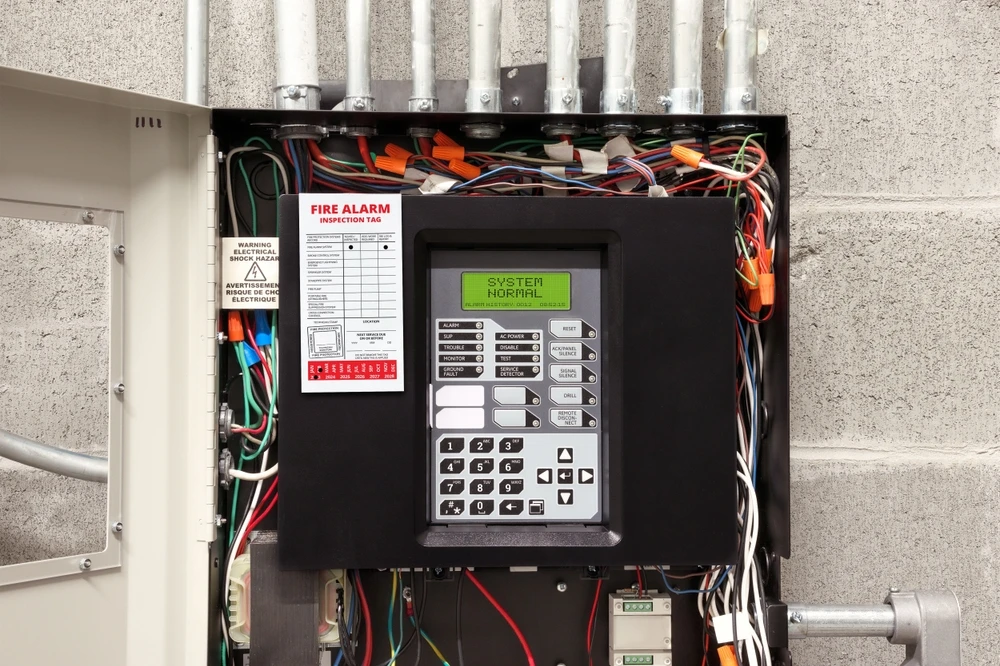
Traditional passive fire methods struggle to address the complexity of today’s buildings, exposing gaps in visibility, verification and long-term upkeep. Building owners, certifiers and contractors are recognising that conventional approaches do not always provide the visibility, traceability or long-term reliability needed in today’s regulatory climate. As a result, smart passive fire systems are becoming the new benchmark for compliance. This section explores why these advancements are redefining the expectations of safety, reliability and lifecycle management.
Traditional passive fire protection relied heavily on manual inspections, paper-based records and physical markers that could degrade or become lost. While these systems met the compliance requirements of their era, they often fell short in long-term traceability, making it difficult to confirm installation quality or audit historical changes decades later. Some of the limitations include:
As buildings adopt more IoT and cloud-based systems, passive fire protection is evolving from static installations into dynamic, trackable safety ecosystems. Connected fire safety models allow building owners and consultants to see how each penetration, barrier and fire-rated element interacts within a larger framework, greatly improving early detection and long-term reliability. Some drivers of this shift include:
Audits have long been slowed by fragmented record-keeping. Digital auditing removes these bottlenecks by giving stakeholders real-time, structured information. As regulations tighten across Australia, tools such as cloud-based record systems, QR-linked penetrations and automated reporting help eliminate inefficiencies that previously slowed down audits or introduced compliance risks. Here, we explore how emerging digital tools are reshaping documentation standards and reducing human error throughout the compliance process.
Cloud-based platforms allow teams to work from the same live information, improving coordination between contractors, certifiers and building managers. Updates appear instantly, reducing delays and preventing conflicting versions of the same record.
Digital tags assign responsibility to every penetration or barrier by linking it to the exact technician, timestamp and installation method. This creates accountability on-site and reduces ambiguity during audits or defect investigations. On-site scanning cuts verification time and reduces disputes over work quality or missing documents. These digital markers are becoming essential in commercial, mixed-use and large-scale residential buildings. Benefits include:
Automation improves accuracy by standardising how information is captured, processed and stored. In high-density buildings where thousands of fire penetrations exist, automation provides a safety net that minimises oversight and strengthens long-term compliance. Instead of relying on individuals to manually generate reports or cross-check documentation, automated systems help ensure:
Integrating passive and active fire systems creates a coordinated safety environment where barriers, sensors and monitoring tools support one another. Advances in sensor technology, monitoring software and building automation are bridging the gap between the two, creating a unified ecosystem that enhances early detection, structural resilience and audit accuracy.
Smart passive fire systems now integrate with sensors that track environmental changes, detect tampering or measure performance. When combined with active systems, these integrations create a holistic safety network. This connectivity supports faster, more informed decision-making. Integrated systems help with the following:
Smart monitoring technologies enable continuous assessment of materials and installations, ensuring deterioration is detected early, long before it compromises fire resistance. Proactive detection extends the lifespan of fire barriers and reduces costly remedial work. Early warnings may include:
In buildings with high occupant turnover and heavy service use, maintaining compliance can be challenging. These advantages make smart passive fire protection particularly valuable in modern apartment towers, commercial complexes and mixed-use environments. Smart systems offer benefits that traditional methods cannot match:

As compliance requirements tighten, building owners must show clear proof of installation quality and ongoing maintenance, not just initial certification. As legal expectations rise, building owners must demonstrate compliance at the time of construction and at every stage afterwards. Insurance providers, too, are tightening their required standards. Let’s see how smart passive fire strategies help mitigate legal and insurance risks, and why fire engineers are shifting towards advisory roles to support long-term building safety.
Sydney’s high-rise sector faces some of the strictest compliance standards due to dense occupancy and complex service layouts. By maintaining a transparent digital footprint, building owners reduce legal exposure and support safer environments. Smart passive fire systems create a defensible chain of evidence that helps validate work quality and respond effectively to compliance disputes or legal challenges.
Insurers increasingly favour buildings that use digital systems to flag risks early, maintain consistent maintenance behaviour and demonstrate a predictable safety profile backed by verifiable data. Digital systems make this easier by consolidating evidence into a central, auditable format. Insurance expectations increasingly include:
Fire engineers are moving beyond their traditional inspection roles to become long-term advisors who guide building owners through complex compliance landscapes. This shift reflects the industry’s growing need for ongoing partnership rather than one-off consultancy. Their responsibilities increasingly include:
Digital twins allow engineers to test fire behaviour and optimise design decisions before construction begins. These models allow engineers and consultants to test scenarios, improve system placement and foresee issues long before construction begins. Learn how digital twins enhance passive fire strategy development and integrate seamlessly into BIM-driven workflows.
Digital twins simulate how fire may spread across different building conditions, enabling teams to identify vulnerabilities early. This proactive modelling greatly improves initial design accuracy. Here are some simulations to help refine barrier placement, material choices and service routeing.
BIM (Building Information Modelling) has become the backbone of modern construction, and integrating passive fire data into these workflows helps ensure consistency across the project lifecycle. When passive fire systems are part of BIM, compliance becomes easier to maintain from design through to occupancy. Integration advantages include:
Long-term compliance requires a framework that remains stable even as tenants change, maintenance teams rotate and building layouts evolve. Smart passive fire strategies help institutions create systems that maintain consistent verification and documentation across decades of occupancy. We outline how to build an audit-ready approach that futureproofs compliance.
High turnover environments often suffer from undocumented modifications or lost records. This ensures compliance survives beyond any single tenant’s occupancy cycle. Smart systems maintain consistency even when contractors change by standardising how inspections are completed, ensuring updates are logged uniformly and keeping maintenance programmes aligned across the building’s lifecycle.
Maintenance teams may change, but the compliance system should not because this reduces risk and promotes consistent compliance. Smart record systems support continuity with:
From design to construction to long-term operation, verification must be integrated into each phase. This approach guarantees that compliance is never an afterthought; it is built into the system itself. Smart passive fire strategies enable this by:
Smart passive fire strategies are no longer optional upgrades; they’ve become the foundation of long-term building safety, risk reduction and regulatory resilience. By integrating digital tools, connected monitoring systems, automated reporting and advanced modelling, building owners gain far greater control over their fire safety obligations while minimising liability, costly rework and audit delays. If you want confidence that your building is not just compliant today but equipped for the next decade of safety requirements, our team is here to help. At IECC, we work closely with building owners, contractors and certifiers to design smart passive fire strategies that deliver long-term clarity, robust documentation and complete lifecycle compliance. Ready to strengthen your fire safety framework? Contact us today to schedule a consultation and discover how smart passive fire systems can futureproof your project from design through to ongoing maintenance.