

Fire Safety Certificate vs Annual Fire Safety Statement in NSW: What’s the Difference?
September 2, 2026
Fire safety compliance in New South Wales can be difficult to navigate because several documents have similar names but serve different purposes. As a passive fire consultant, IECC helps building owners, owners corporations and building managers understand the difference between a Fire Safety Certificate and an Annual Fire Safety Statement (AFSS), including when each document is required.
A Fire Safety Certificate is generally associated with the completion of new building work or work involving fire safety measures. An AFSS is an ongoing annual requirement for an existing building. Understanding this distinction helps owners, owners corporations and building managers meet their obligations, plan inspections and avoid preventable compliance problems.
The requirements are primarily governed by the Environmental Planning and Assessment (Development Certification and Fire Safety) Regulation 2021. The exact obligations for an individual property depend on its approvals, current fire safety schedule and any applicable fire safety order.
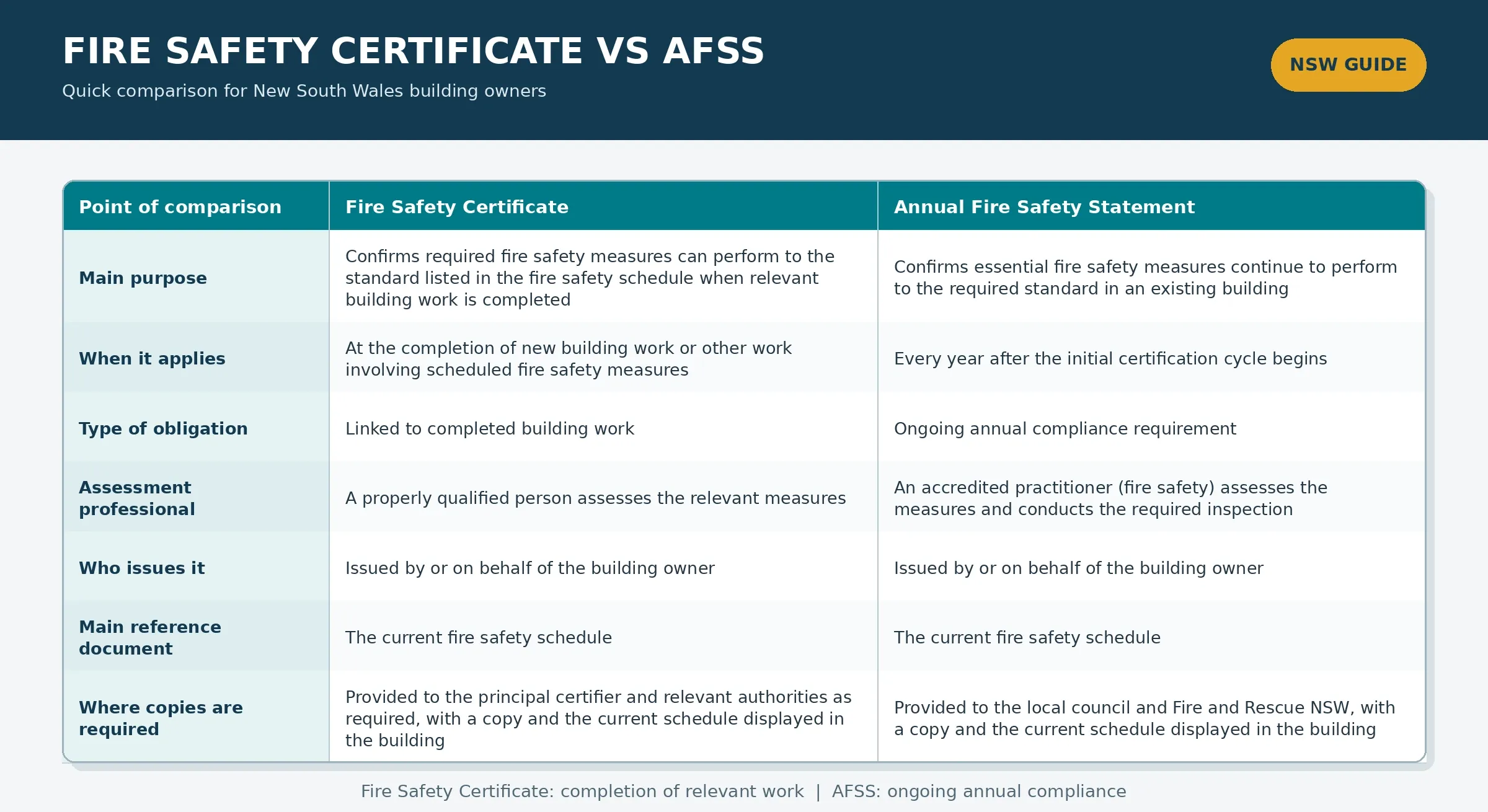
The NSW Government provides guidance on NSW fire safety certification requirements, including Fire Safety Certificates, annual and supplementary statements, fire safety schedules and approved forms.
A Fire Safety Certificate confirms that the fire safety measures covered by the certificate have been assessed and are capable of performing to the minimum standard specified in the building’s current fire safety schedule.
It is normally issued when building work involving fire safety measures has been completed. This may include construction of a new building, a major alteration, a change of use or fire safety upgrade work required by an approval or order.
Common measures covered by a fire safety schedule include:
The certificate does not establish a new performance standard. It confirms that the applicable measures can perform to the standards already identified in the fire safety schedule.
A Fire Safety Certificate is generally required when building work involving scheduled fire safety measures has been completed. Where an occupation certificate is required, the relevant Fire Safety Certificate must ordinarily be provided before the occupation certificate can be issued.
The requirement may arise after:
Not every property or minor building project requires a Fire Safety Certificate. The determining factors include the approved work, the building classification, the conditions of consent and whether a fire safety schedule applies. Owners should check the approval documents or obtain advice from the principal certifier or local council rather than relying only on the building’s general use.
NSW fire safety legislation recognises final and interim Fire Safety Certificates. A final certificate covers the essential fire safety measures specified in the schedule for the completed building. An interim certificate may apply to the measures for a completed part of a building where occupation is being staged.
This should not be confused with the former categories of interim and final occupation certificates. For development consents granted from 1 December 2019, NSW removed those occupation certificate categories while retaining the ability to authorise staged occupation.
The building owner chooses a properly qualified person to assess each fire safety measure covered by the certificate. That person must inspect and verify the measure’s performance and test the operation of new fire safety equipment included in the current schedule.
NSW Government guidance on fire safety practitioner requirements and accreditation can help owners understand the qualifications and appointments required for different fire safety assessment activities.
The owner should confirm that the person has qualifications, experience and expertise relevant to the particular measure being assessed. A practitioner who is qualified to assess one system is not automatically qualified to assess every fire safety measure in a building.
Once issued, the certificate and current fire safety schedule must be handled, lodged and displayed in accordance with the applicable NSW requirements. The Fire Safety Certificate is therefore more than an installer handover record. It is a formal compliance document connected to the approved building work.
An Annual Fire Safety Statement is a yearly statement confirming that the essential fire safety measures applying to an existing building have been assessed and found capable of performing to the required standard.
It also confirms that the required building inspection has been undertaken by an accredited practitioner (fire safety). This inspection considers matters including the condition of required exit systems and paths of travel.
An AFSS does not certify that a system was installed for the first time. Instead, it demonstrates that the building’s essential fire safety measures continue to meet the standards against which they must be maintained. IECC’s AFSS and maintenance services can help building owners coordinate routine inspections, testing, maintenance and the documentation required for ongoing annual compliance.
An AFSS is required where essential fire safety measures apply to a building under a fire safety schedule or another relevant legislative requirement. This commonly includes many:
The presence of a fire safety schedule is more reliable than a general list of building types when determining whether an AFSS is required. Owners who cannot locate the current schedule should contact the local council or review the building’s approval and fire safety order records.
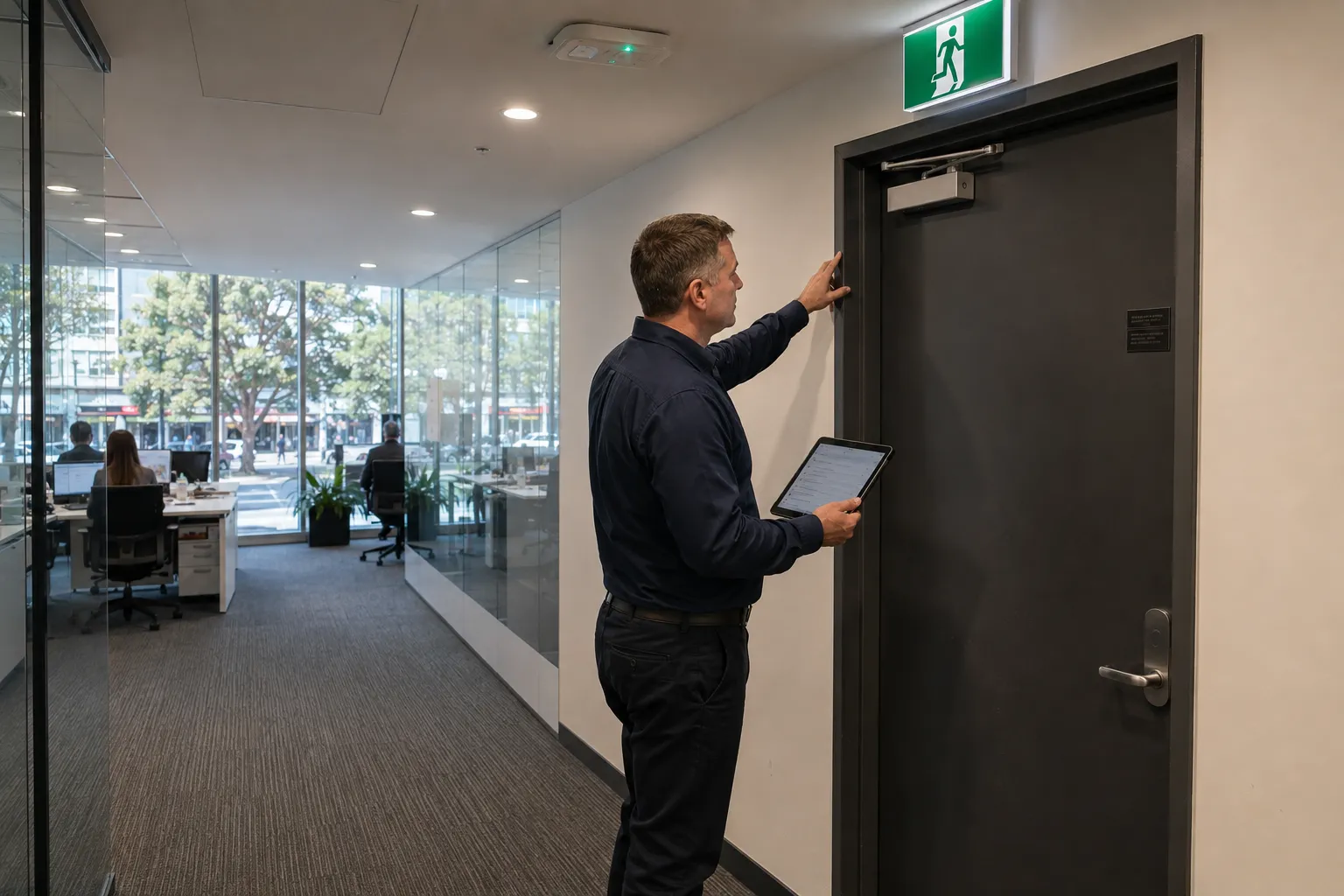
An AFSS must address the essential fire safety measures that apply to the building. Each measure must be assessed against:
The process also includes the required inspection of the building by an accredited practitioner (fire safety). An AFSS should not be issued simply because routine service visits have occurred. The annual statutory assessment must support the declaration made in the statement.
The assessments and building inspection supporting an AFSS must be completed within the three months before the statement is issued. This is different from the annual submission cycle.
The three-month requirement does not mean fire safety measures only need attention once a year. Individual systems may require testing, servicing or maintenance at shorter intervals under the applicable standards, manufacturer requirements, approval conditions or maintenance program. Those ongoing activities help keep the systems operational, while the AFSS provides the formal annual compliance statement.
The first AFSS is generally required within 12 months after the relevant Fire Safety Certificate. Subsequent statements must generally be issued within 12 months after the previous AFSS.
Owners should confirm the due date recorded by the local council because older buildings, revised schedules, orders and the property’s compliance history can affect the date being administered. Testing and assessment should be arranged well before that deadline so there is time to investigate and rectify defects.
The owner must ensure the completed AFSS is provided to:
A copy of the current statement and fire safety schedule must also be prominently displayed in the building.
Some buildings have critical fire safety measures that require assessment more frequently than once every 12 months. These measures are addressed through a Supplementary Fire Safety Statement.
The applicable fire safety schedule identifies whether a measure is critical and states how often the supplementary statement is required. An annual statement does not replace a supplementary statement, and a supplementary statement does not remove the need for the AFSS.
Owners should therefore check the complete fire safety schedule rather than assuming that annual assessment is the only reporting requirement.
The fire safety schedule is the central reference document for both the Fire Safety Certificate and the AFSS. It identifies the fire safety measures applying to the building and the minimum performance standard for each measure.
A schedule may be issued with a construction certificate, complying development certificate or fire safety order. It may also be replaced or amended through the appropriate regulatory process when approved work changes the building’s fire safety requirements.
At the completion of relevant building work, the schedule identifies what must be assessed for the Fire Safety Certificate. A final certificate generally covers every essential fire safety measure specified in the schedule for the completed building. A certificate applying to a completed part or particular work must accurately reflect its permitted scope.
For annual compliance, the schedule acts as the assessment checklist. The accredited practitioners must assess the applicable measures against the performance standards recorded in the schedule.
This is why an inaccurate, incomplete or outdated schedule can create serious practical problems. If the document does not reflect the building or its approvals, owners should seek advice from the local council or an appropriately qualified building professional. Contractors should not informally rewrite the schedule or substitute a different standard without the required approval.
The building owner has the central legal responsibility for both documents, even though certifiers, strata managers, facility managers, fire protection contractors and accredited practitioners may coordinate parts of the process.
For a strata scheme, the relevant responsibility generally rests with the owners corporation. For a commercial property, it ordinarily rests with the legal owner. A lease or management agreement may allocate administrative tasks or costs, but private contractual arrangements do not automatically remove the owner’s statutory obligations. For owners corporations, passive fire registers for strata buildings can help organise inspection findings, defects, rectification records and supporting information for annual compliance.
Depending on the project, the owner or person acting on the owner’s behalf must:
The principal certifier reviews the required documentation before determining an occupation certificate but does not replace the owner’s certification responsibilities.
For ongoing annual compliance, the owner must:
Property and facility managers can administer these tasks, but owners should maintain oversight of the due date, practitioner appointments and final submission.
Practitioners are responsible for carrying out assessments and inspections within their competence and accurately recording the results. Fire protection contractors may also service, test and repair systems as part of the building’s maintenance program.
However, routine service reports do not automatically constitute an AFSS. Defects identified during maintenance or assessment must be considered and addressed before a practitioner can support the relevant compliance declaration.
An overdue AFSS is a regulatory compliance issue. The local council may issue escalating penalty notices based on how many weeks the statement remains outstanding. Continued or serious non-compliance may also lead to formal orders, further investigation or court proceedings.
The owner still has to provide the AFSS after receiving a penalty. Paying an infringement does not remove the underlying obligation.
An overdue statement may also create practical concerns for property transactions, leases, finance, insurance and tenant compliance reviews. The effect depends on the particular contract, policy and circumstances, so an overdue AFSS should not be described as automatically invalidating insurance or cancelling an approval.
The owner should act promptly to:
If council enforcement action has already started, the owner should respond within any stated timeframe and obtain professional advice where necessary. A practitioner should not be asked to approve a non-compliant measure simply to meet an overdue deadline.
Fire safety compliance is easier to manage when it is treated as a planned annual process rather than a last-minute paperwork task. Owners and building managers can reduce delays by:
Early preparation is particularly important in large or complex buildings because one unresolved defect can delay completion of the overall statement.
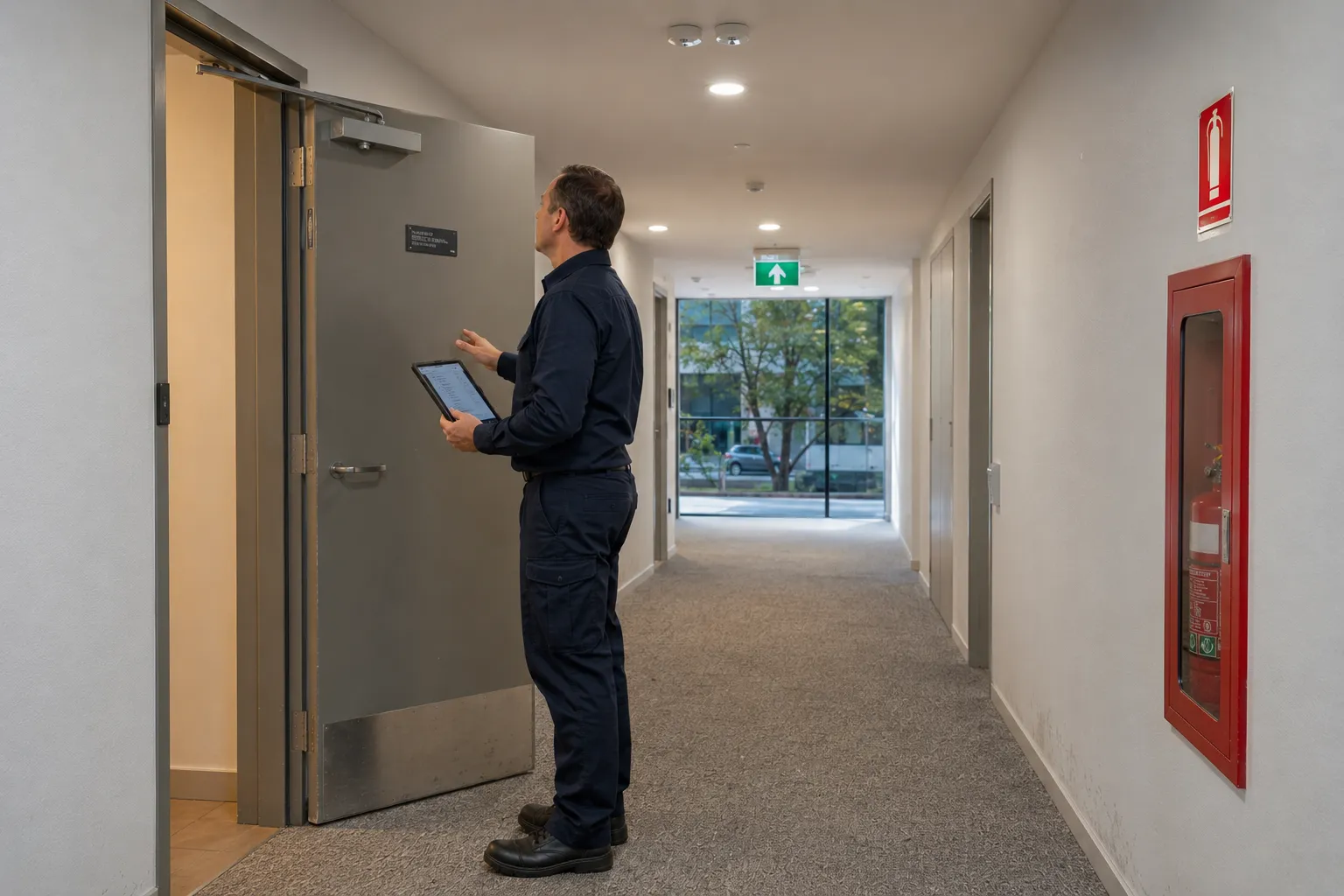
A Fire Safety Certificate is generally required when relevant building work has been completed and the applicable fire safety measures must be certified against the fire safety schedule. An AFSS is required during the building’s ongoing occupation to confirm annually that its essential fire safety measures remain capable of meeting the required standards.
Many buildings will need both documents at different times. The Fire Safety Certificate establishes compliance at the completion of relevant work, while the AFSS supports continuing compliance in the years that follow. A building may also require Supplementary Fire Safety Statements where critical measures are listed in its schedule.
A Fire Safety Certificate and an Annual Fire Safety Statement serve different but connected purposes. The certificate confirms that applicable fire safety measures can perform as required when relevant building work is completed, while the AFSS verifies their continuing performance throughout the building’s occupation. Both rely on an accurate fire safety schedule and careful coordination between owners, managers, certifiers and appropriately qualified practitioners.
By confirming due dates early, arranging assessments before deadlines and addressing identified defects promptly, building owners can reduce compliance risks and help maintain a safer property. IECC can assist owners, owners corporations and building managers in understanding their building-specific requirements and managing the documentation needed to support ongoing fire safety compliance.