

How Passive Fire Defects Can Affect the Performance of Active Fire Systems
June 4, 2026
Passive fire protection is often overshadowed by sprinklers, alarms and other active fire systems. However, the effectiveness of these active measures is closely tied to the condition of the building elements that contain fire and smoke.
Defects in fire-rated walls, doors, ceilings, service penetrations and firestopping can quietly compromise compartmentation. This may change how heat, smoke and flame move throughout a building, placing additional pressure on systems that were designed around a specific fire safety strategy.
IECC explains how weaknesses in passive fire protection can affect the performance of detection, suppression and smoke-control systems. Understanding this relationship is essential for maintaining life safety, protecting property and ensuring that the building continues to perform as intended.
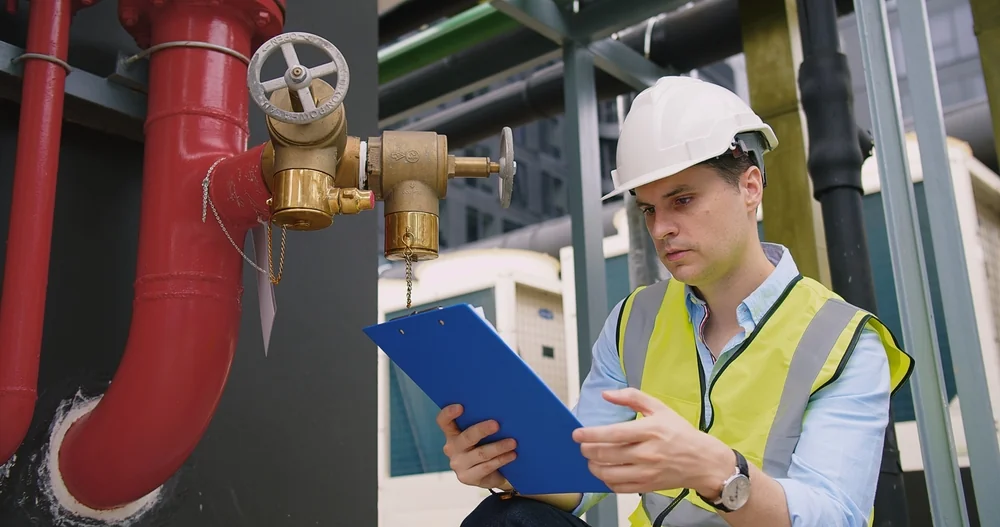
Passive and active fire protection are often inspected and maintained as separate systems, but they form part of the same life-safety strategy.
Passive fire protection is designed to slow the spread of fire and smoke through compartmentation, fire-resistant construction and protected escape routes. Active systems are designed to detect an incident, warn occupants and help control fire and smoke movement.
These measures rely on each other. A sprinkler system may operate correctly, but its effectiveness can be reduced if a fire spreads through unsealed penetrations into neighbouring rooms or concealed spaces. Smoke-control systems may activate as intended, but they can struggle to maintain the required airflow or pressure if smoke barriers and dampers are compromised.
Fire safety strategies generally rely on several measures working together. Common assumptions include:
When passive fire elements deteriorate or are altered, these assumptions may no longer reflect the actual condition of the building.
Passive fire defects are not always obvious during day-to-day building use. Many occur above suspended ceilings, inside risers or behind walls. Others develop gradually through wear, damage or alterations made during refurbishment work.
Even relatively small defects can create pathways that allow smoke, heat and flame to move beyond the intended compartment.
Pipes, cables, ducts and other services frequently pass through fire-rated walls and floors. Where these openings are not properly firestopped, they can weaken the compartment boundary.
Common issues include:
These defects can allow smoke and hot gases to bypass physical barriers and move into ceiling voids, service risers or adjacent rooms.
Fire doors are designed to protect escape routes and limit the movement of fire and smoke between compartments. Their performance depends on the complete door set, including the leaf, frame, hardware, seals, glazing and self-closing mechanism.
Common defects include:
A fire door may appear functional during normal building use while no longer providing the level of protection assumed in the original fire strategy.
Fire and smoke dampers are installed in ductwork and other openings to limit the spread of smoke and flame through ventilation systems. If a damper cannot close when required, the duct may become a pathway between fire compartments.
Dampers can be affected by:
Because dampers are often hidden above ceilings or inside risers, their condition may not be apparent without targeted inspection and functional testing.
Suspended ceilings, shafts, risers and cavity barriers also play an important role in compartmentation. Concealed spaces can allow fire and smoke to move through parts of a building that are difficult to observe and access.
Problems may arise where:
These defects can allow smoke and heat to spread beyond the area where detection, suppression and smoke-control systems were expected to respond.
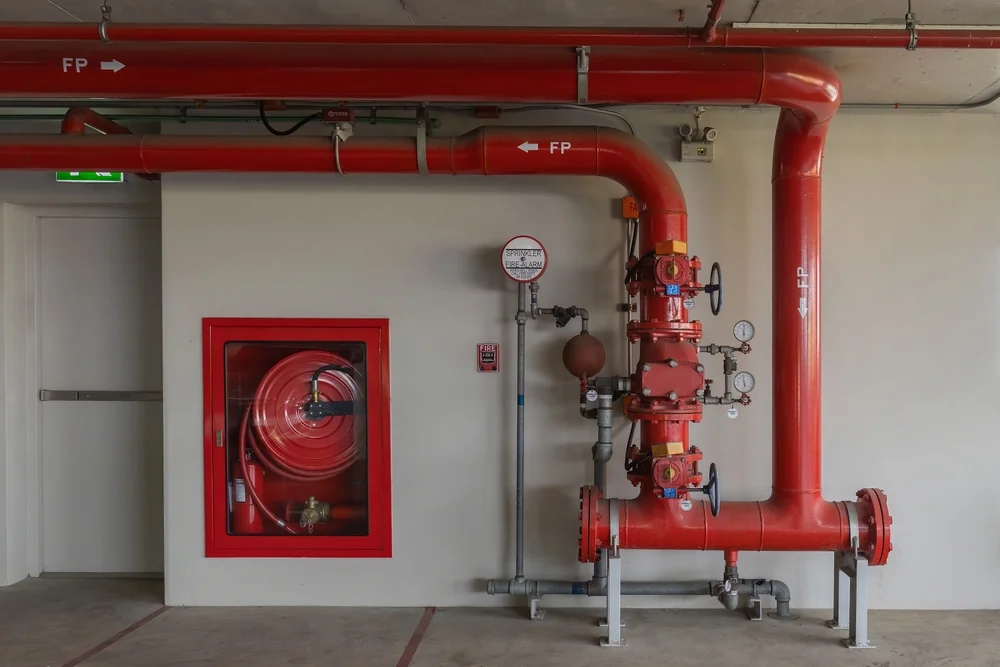
Passive fire protection creates the conditions that active systems rely on. When compartment integrity is compromised, active measures may still operate, but they may be required to respond to a larger or less predictable incident.
Smoke and heat detectors are positioned based on expected smoke movement within the building. Unsealed openings, damaged barriers and uncontrolled airflow can change how smoke travels.
Smoke may escape into a ceiling void, shaft or adjacent room before reaching the detector closest to the fire. In other cases, detectors outside the compartment of origin may activate earlier than expected.
This can affect the sequence of alarm signals and make it more difficult to understand how an incident is progressing. Aspirating smoke-detection systems may also be affected by uncontrolled airflow that dilutes or redirects smoke before it reaches sampling points.
Sprinkler systems are designed using defined hazard classifications, hydraulic assumptions and expected operating areas. If fire spreads through compromised walls, floors or concealed spaces, a greater number of sprinklers may operate.
This can place additional demand on the available water supply and affect pressure and discharge density at critical locations. Fire spread into ceiling voids or adjacent rooms may also make the incident more difficult to control than the original design scenario anticipated.
The same principle applies to other suppression systems. Their performance depends on the fire remaining within the area they were designed to protect.
Mechanical smoke-control systems rely on predictable airflow paths. Stairwell pressurisation, lobby pressurisation and smoke-extraction systems are designed around defined pressure differentials, leakage rates and compartment boundaries.
Unsealed penetrations, defective doors and failed dampers can create uncontrolled leakage paths. As a result, the system may struggle to maintain the intended pressure or may draw smoke into spaces that were meant to remain protected.
This can reduce visibility and affect the tenability of corridors, stairs and other escape routes.
Buildings rarely remain unchanged throughout their working life. New tenants, refurbishments, service upgrades and changes of use can all affect passive fire protection.
A seemingly minor alteration may create a defect if it is not reviewed and completed correctly. Installing a new cable through a fire-rated wall, replacing flooring beneath a fire door or changing a room layout can affect the original fire strategy.
Alterations may include:
Changes in use can be particularly important. For example, converting an office into a storage area or technical room may alter the fuel load, fire-growth characteristics and operational requirements of the space.
Passive fire protection should therefore be considered during the planning, construction and handover stages of any building alteration.
Many passive fire defects are concealed above ceilings, inside shafts or behind service cupboards. Routine visual checks may identify obvious problems, such as a wedged-open fire door, but they may not reveal hidden breaches or damaged components.
Targeted inspections carried out by competent personnel can identify:
Identifying and rectifying these issues helps maintain the conditions that active fire systems were designed to operate within.
In NSW, the maintenance of essential fire safety measures is also subject to updated requirements. From 13 February 2026, essential fire safety measures in class 1b and class 2 to class 9 buildings must be inspected and tested in accordance with AS 1851-2012. Building owners are responsible for ensuring that required maintenance is completed by competent people and that identified defects are addressed promptly in accordance with the NSW fire safety regulation.
Effective fire safety depends on more than the presence of alarms, sprinklers and smoke-control systems. These active measures must be supported by fire doors, fire-rated walls, firestopping, dampers and other passive elements that limit the movement of heat, smoke and flame.
When passive protection is compromised, the conditions assumed during design can change. This may increase the demands placed on active systems and reduce the time available for evacuation and emergency response.
Regular inspections, careful management of building alterations and timely rectification of defects help ensure that passive and active fire protection systems continue to work together as intended.