

Passive Fire Protection Requirements for Health and Aged Care Facilities
May 11, 2026
In health and aged care facilities, passive fire protection is more than a compliance requirement. It is a critical safeguard for occupants who may be unable to respond quickly or evacuate independently during an emergency. Patients and residents may be immobile, medically vulnerable, sedated, asleep or cognitively impaired, which means the building itself must provide a higher level of fire and smoke containment.
Fire safety in these environments relies heavily on compartmentation, fire-resisting construction, smoke separation and protected evacuation paths. These systems help maintain tenable conditions long enough for staged evacuation, defend-in-place procedures and emergency response operations to occur safely.
IECC discusses the passive fire protection requirements that influence the design, construction and ongoing management of health and aged care buildings. This article examines how fire compartments, fire resistance levels, fire and smoke doors, penetration sealing and fire-rated building elements work together to reduce fire spread and protect critical care environments. It also explains how passive fire systems connect with compliance obligations, accreditation requirements and long-term maintenance responsibilities.
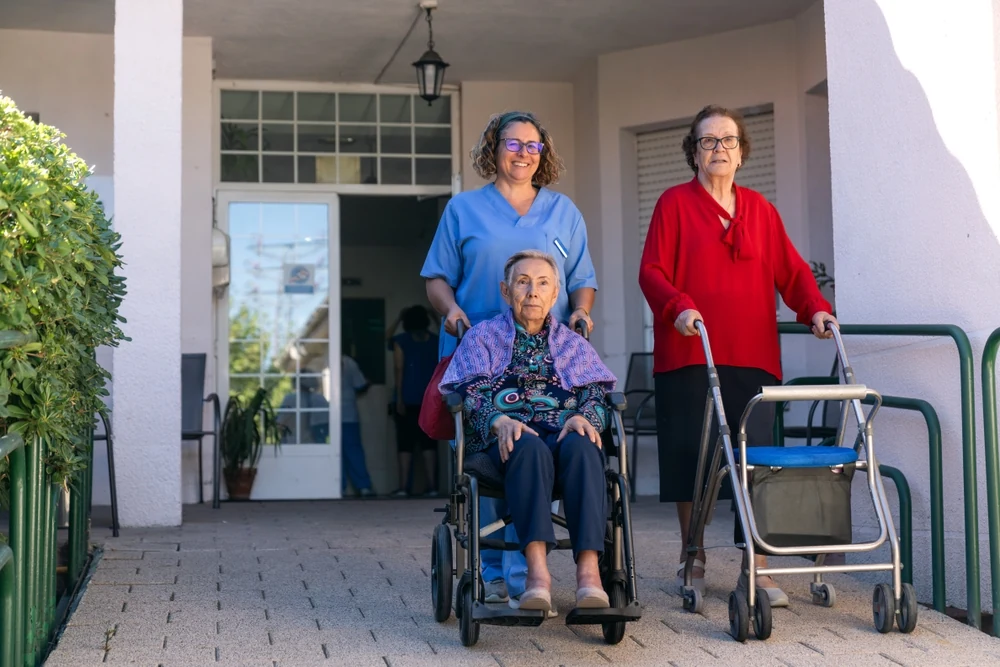
Fire safety requirements are more stringent in health and aged care settings because many occupants cannot detect danger, respond quickly or self-evacuate. Regulations and fire safety strategies therefore place greater importance on passive fire protection systems that can contain fire and smoke while staff manage a controlled response.
This creates higher expectations for compartmentation, fire-rated construction, service penetrations, evacuation routes and protected areas of refuge. Design and compliance decisions must be based on the real conditions of care environments, where occupants may be asleep, sedated, confused, frail, bedbound or dependent on staff assistance.
Many residents and patients cannot move without assistance or can only move very slowly. In aged care facilities, mobility aids are common in circulation spaces. In hospitals and health facilities, beds, trolleys and monitoring equipment may need to move with the patient during an emergency.
Because of this:
Fire compartments may need to support progressive horizontal evacuation to a safer area on the same floor
Fire and smoke separation between wards, wings and care areas becomes critical
Doors, walls, ceilings and floors along evacuation paths must maintain their fire and smoke resistance long enough for staff-assisted movement
The greater the dependency of occupants, the more important it becomes for passive fire measures to contain fire in the room or compartment of origin.
Health and aged care facilities often have a high proportion of occupants who are asleep, sedated or living with dementia or other cognitive impairments. These occupants may not recognise alarms, understand instructions or respond appropriately to visible smoke or staff directions.
This increases the importance of:
Smoke compartmentation that limits smoke spread into corridors and sleeping areas
Fire-rated doors with appropriate closers and hold-open devices connected to the fire detection system
Separation between higher-risk areas such as commercial kitchens, laundries, maintenance rooms and nearby care spaces
Since self-rescue cannot be relied upon, the building fabric must help prevent smoke and hot gases from compromising sleeping, treatment and refuge areas during the early stages of a fire.
Although staff in care environments are trained for emergencies, they are primarily responsible for clinical care and resident support. Night shifts often operate with reduced staffing levels, while occupant vulnerability remains high.
For this reason, fire safety strategies in health and aged care facilities usually assume evacuation will be phased and controlled rather than immediate and building-wide. Staff need enough time to relocate occupants progressively or defend in place where that forms part of the fire strategy.
Higher fire safety requirements are therefore not optional enhancements. They are essential for licensing, accreditation, resident safety and the ongoing operation of health and aged care facilities.
Passive fire protection in health and aged care facilities must function as an integrated safety system from the moment a fire starts. Its role is to slow fire and smoke spread, protect escape routes and maintain the integrity of critical areas long enough for safe evacuation or defend-in-place procedures to be carried out.
Unlike active systems such as sprinklers and alarms, passive measures perform through their construction, fire resistance rating and correct detailing. Their effectiveness depends on fire-rated elements remaining intact at every junction, opening and service penetration.
The goal is not simply to protect the building fabric. It is to protect vulnerable occupants who may not be able to leave quickly without assistance.
The first requirement is compartmentation that prevents rapid horizontal and vertical fire spread. Fire-rated walls, floors and ceilings must achieve their specified fire resistance level for structural adequacy, integrity and insulation where required.
Weak points such as joints, service penetrations, ceiling interfaces and wall junctions must be sealed with tested systems so fire and hot gases cannot bypass the barrier. Even a small gap can undermine the performance of an entire fire compartment.
Smoke control is equally important. In health and aged care environments, smoke inhalation is often one of the most serious life safety risks. Fire and smoke doors must close reliably under alarm, latch properly and provide an effective seal around the leaf and frame.
Gaps under doors, unsealed cable penetrations or poorly detailed ceiling voids can allow smoke to spread into adjacent wards, treatment rooms or refuge areas before flames reach those spaces.
Passive fire protection must keep egress paths usable for as long as required for staged evacuation or relocation. Corridors forming part of the evacuation route need adequate fire and smoke separation from patient rooms, utility areas and higher-risk spaces such as kitchens, laundries and plant rooms.
Fire-rated doors into these areas must resist warping, close correctly and remain operable so staff can move beds, mobility aids and equipment without obstruction.
Where defend-in-place forms part of the fire strategy, refuge areas must be enclosed by construction that resists fire and smoke while limiting heat transfer to the protected side. If glazing is used in these areas, it must be fire-rated and installed as part of a tested framing system, not simply heat-strengthened or toughened safety glass.
Passive fire protection is only effective if each component is kept in sound condition and remains consistent with its approved fire-resistance rating. Regular inspection and maintenance are not optional. They are core compliance obligations that directly affect resident safety, patient safety and accreditation outcomes.
The following passive fire systems typically require scheduled inspection, testing and repair as part of an ongoing maintenance regime in health and aged care environments.
Fire and smoke doors are essential for compartmentation and safe evacuation. They help prevent fire and smoke from spreading through corridors, wards, bedrooms, treatment areas and service zones.
Routine checks should confirm that:
Any excessive gaps, missing seals, altered hardware or damaged door components can compromise the rating and should be rectified promptly.
Fire and smoke dampers protect ductwork penetrations through fire-rated walls and floors. They must operate correctly when a fire alarm is triggered or when heat is detected.
Maintenance programmes should ensure:
All dampers are accessible through compliant access panels
Blades move freely without obstruction from dust or damaged components
Fusible links or actuators are intact, correctly set and not painted over
Dampers close fully on test signals and reopen correctly if motorised
Penetration seals around dampers remain intact and appropriately fire-stopped
Regular operational testing is particularly important in hospitals and aged care homes where HVAC systems are extensive and can otherwise contribute to smoke spread.
Service penetrations for cables, pipes, ducts and medical gases are common in clinical and care environments. Each penetration through a fire-rated element must be sealed with a tested fire-stopping system that suits the wall or floor type, the service passing through it and the required fire resistance level.
These seals must also remain intact as services are added, removed or altered. Unsealed or poorly sealed penetrations can compromise entire fire compartments, which is especially serious in operating theatres, high-care wards, dementia units and protected corridors.
Glazed screens and vision panels are often used around corridors, nurses’ stations, treatment spaces and patient areas. Where these form part of a fire barrier, both the glass and framing system must maintain the required level of fire resistance.
Ongoing maintenance should confirm that:
Fire-rated glass is intact, with no cracks or edge damage
Beads, gaskets and glazing compounds are secure and appropriate for the system
Frames are firmly fixed to the surrounding fire-rated construction
No unauthorised film, manifestation or hardware has been added in a way that compromises performance
Any glazing replacement in these areas must use like-for-like fire-rated products that match the original certification.
Any building work in a health or aged care facility can compromise passive fire protection if it is not planned, installed and checked correctly. Even minor upgrades can affect fire compartments, fire resistance levels and smoke control pathways.
In facilities housing vulnerable occupants, seemingly minor non-compliances can quickly become life safety risks. Service upgrades, layout changes and refurbishment works should therefore be assessed before, during and after construction.
Mechanical, electrical, medical gas and communications upgrades are among the most common causes of passive fire non-compliance. Every cable tray, pipe, duct or service bundle that passes through a fire-rated wall, floor or shaft must be protected to maintain the fire resistance level of that element.
Typical issues include unsealed penetrations, poorly sealed openings, substitution of tested fire-stopping systems with generic sealants and service changes that exceed the tested configuration. For example, a new bundle of data cables through a fire corridor wall can invalidate the original fire stopping unless a suitable tested system is installed.
Attention is also needed where plastic pipes or insulated services penetrate fire compartments. Without certified collars, wraps or preformed systems, these services can fail early and allow fire or smoke to spread between care areas, plant rooms and evacuation routes.
Refurbishment, ward reconfiguration and the creation of new clinical spaces often involve changes to walls, ceilings and doors that form part of the fire compartmentation strategy. In health and aged care facilities, this strategy is central to progressive horizontal evacuation and defend-in-place procedures.
A change in room use can also affect fire risk. Converting an office into a high-dependency care space, storage room or treatment area may alter the fire load, occupant risk and compliance requirements. This can trigger the need to reassess compartment boundaries, fire resistance levels, fire door performance and protected paths of travel.
Inspection, documentation and compliance records are central to demonstrating that passive fire protection remains effective and code compliant. Regulators, insurers and accreditation bodies increasingly expect a clear audit trail showing that fire-resisting elements have been correctly installed, periodically inspected and properly maintained.
This means moving beyond one-off certifications at construction completion. Ongoing records need to show the condition of fire and smoke compartments, fire-rated doors, service penetrations, structural fire protection and fire-resisting ceilings in a format that can be easily verified during audits, maintenance reviews or incident investigations.
Routine inspections should follow the frequencies required by the National Construction Code, relevant Australian standards and applicable state or territory fire safety regulations. In critical environments such as operating theatres, intensive care units and dementia wards, more frequent checks may be justified due to higher risk and heavy use.
Inspections should be carried out by competent persons familiar with the tested systems in use. Visual inspections need to be detailed enough to identify paint build-up on door seals, unapproved drilling through frames, missing identification labels, damaged linings and other issues that may reduce fire resistance.
Accurate documentation should begin at design and construction and be maintained throughout the life of the facility. Every passive fire protection system should be traceable back to test reports, assessment reports or recognised fire engineering analysis.
Essential documents include:
Any refurbishment, cabling upgrade, medical gas installation or new plant work should trigger a formal review of passive fire integrity. New penetrations must be sealed with systems that match or exceed the existing fire resistance level, and each penetration seal should be recorded for future inspection.
Passive fire inspections in health and aged care facilities frequently uncover recurring defects that undermine compartmentation, evacuation strategies and compliance with fire engineering reports. Many of these issues arise from minor alterations, maintenance activities or equipment upgrades that were not coordinated with the original fire design.
Understanding the problems most often identified during inspections helps facility managers, project teams and maintenance contractors prevent non-compliance and avoid costly rectification work in occupied clinical and residential care environments.
Compartmentation failures are among the most common and serious defects. These often occur where services pass through fire-rated walls, floors or ceilings without correct fire stopping.
Typical examples include nurse call, data or CCTV cables pulled through a wall and sealed only with foam, cloth or non-rated filler. Bundled medical gas pipework may also pass through risers or walls without approved collars, wraps or tested sealing systems.
Access hatches to ceiling spaces can also create problems. Unsealed gaps around frames, missing intumescent seals and non-rated lids may allow smoke to spread beyond the intended compartment. In aged care bedrooms, treatment areas and protected corridors, this can seriously affect evacuation safety.
Ceiling voids and interstitial spaces are another common issue. Fire-rated soffits or bulkheads may be cut or interrupted for new ductwork or conduits, then not reinstated to the required rating. Over time, multiple small changes can significantly weaken a fire or smoke barrier.
Service penetrations are a persistent source of non-compliance in both new and existing facilities. Common inspection findings include generic sealants used without evidence of a tested fire-resistant system, combustible backfill materials around pipes and cables, and missing or incorrectly fitted fire collars on plastic pipework.
In plant rooms and risers, fire stopping is often removed during maintenance and not properly replaced. Multi-service penetrations are sometimes sealed as one large opening instead of using tested systems suited to each service type, substrate and orientation.
Documentation is another frequent issue. Inspectors may find fire-stopping products installed without labels or records showing the tested system number, orientation or fire resistance level. In healthcare environments where refurbishments are frequent, the absence of a penetration register makes it difficult to verify ongoing compliance.
Vertical shafts carrying services between floors are critical in multi-storey health and aged care facilities. Inspections often find riser doors that are not fire-rated, doors without smoke seals, unsealed penetrations within risers and combustible materials stored inside service shafts.
Where riser walls or shaft linings are altered for new services, the reinstatement work must match the required fire-rated construction. Even small unsealed gaps at floor junctions can allow smoke and hot gases to spread between wards and departments, directly undermining staged evacuation strategies.
Passive fire protection in health and aged care facilities plays a critical role in life safety, clinical continuity and regulatory compliance. Effective compartmentation, fire-resisting construction, smoke control measures and correctly maintained fire-rated systems help slow fire development and protect occupants who may not be able to evacuate without assistance.
Maintaining this level of protection depends on coordinated design, compliant installation, regular inspection, disciplined maintenance and accurate documentation across the full life of the facility. In care environments, small defects in passive fire systems can have serious consequences, which makes ongoing management just as important as the original construction.