

Service Penetration Sealing Records: Why Documentation Matters for Sydney Buildings
July 8, 2026
Every service penetration has the potential to affect fire compartmentation, acoustic performance and overall compliance if it is not properly documented. While the installation itself is critical, accurate records are important for demonstrating that passive fire systems continue to perform as intended throughout the life of a building. For construction, refurbishment and ongoing building management, maintaining thorough documentation is an important part of meeting National Construction Code requirements and supporting long-term building safety.
As projects become more complex and buildings undergo upgrades, reliable penetration sealing records help building owners, facility managers, certifiers and fire safety practitioners manage risk with greater confidence. With guidance from IECC, well-maintained documentation supports inspections, future maintenance, refurbishment works and regulatory compliance while protecting the integrity of fire-rated building elements.
Service penetration sealing records are an important management tool for verifying that fire-stopping systems have been installed correctly and continue to support the required performance of fire-rated building elements. They capture what has been installed, where it is located and how it must perform, helping ensure the original design intent is not lost as services are added, removed or altered over time.
Accurate documentation becomes even more important in buildings with dense service layouts, mixed-use occupancy and complex essential services. Without reliable records, contractors may be forced to make assumptions about what sits behind walls, floors and ceilings. This increases the risk of damaging fire-rated elements, using incompatible systems or creating undocumented openings that affect compliance.
Well-maintained records also support future decision-making. When owners, contractors and consultants can quickly confirm how a penetration has been sealed, they can plan repairs, upgrades and inspections with less disruption and greater confidence.
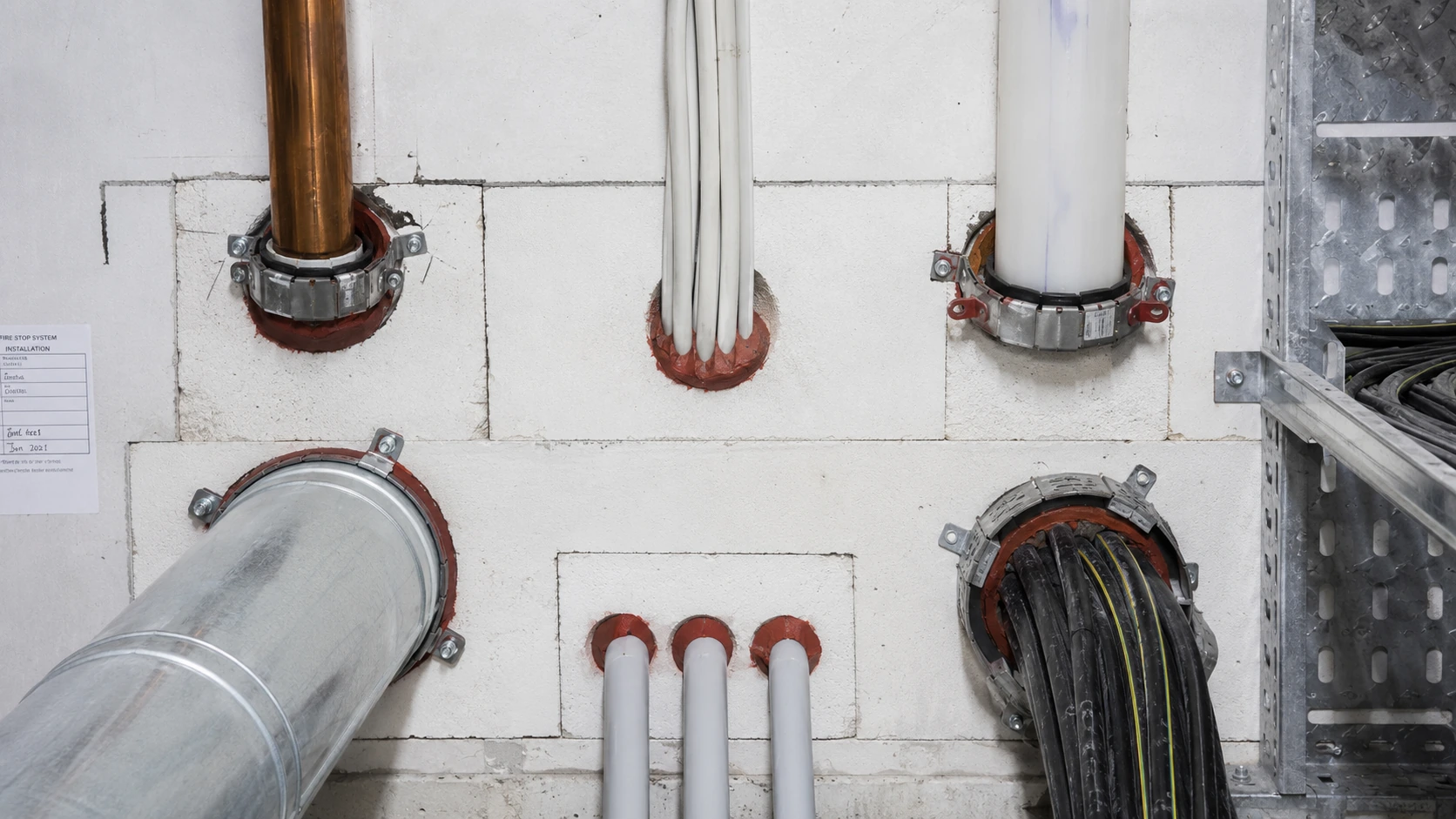
Penetration sealing records provide evidence that fire and service penetrations have been treated in accordance with the NCC, AS 4072.1, relevant test reports, assessments and any performance solutions that apply to the project. Regulators, certifiers and fire safety practitioners need traceable documentation rather than informal site notes or ad-hoc labels.
Effective records typically include:
This level of detail allows certifiers and practitioners to confirm that the installed system matches the required performance rating. It also helps owners demonstrate that later modifications have not compromised fire compartmentation, acoustic separation or other approved building requirements.
Penetration sealing records must capture enough detail for a certifier, builder, fire safety practitioner or maintenance contractor to quickly verify that each service penetration maintains the required performance. Incomplete or vague entries create compliance risk and make later inspections more difficult and costly.
Every entry should make it possible to locate the penetration without guesswork. At a minimum, this should include:
The description should allow someone unfamiliar with the project to find the penetration quickly. Unique IDs that are physically tagged at the seal and repeated in the register improve traceability, especially in larger buildings with hundreds or thousands of penetrations.
Records should also show that the installed seal matches a tested and approved system. This includes:
Where acoustic, smoke or thermal requirements apply, the record should also note the relevant performance criteria. This is particularly important when the same penetration must satisfy more than one requirement.
Installation and inspection information should confirm what was actually completed on site. Entries should capture the installation date, installing contractor or technician, any approved site variations, photographs and inspection outcomes. If defects are found and rectified, those actions should be logged against the same penetration ID to preserve a clear audit trail.
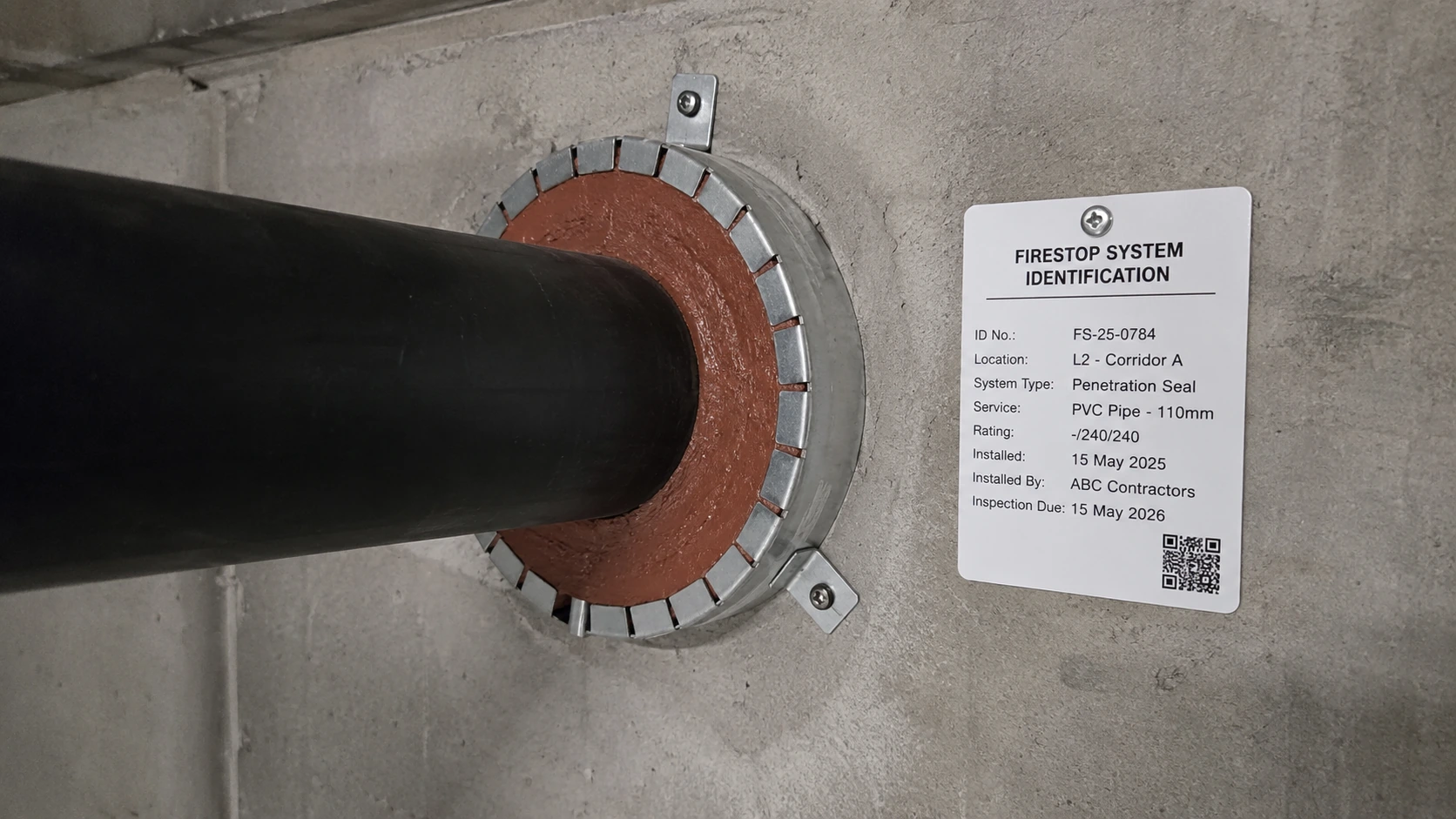
Service penetrations are rarely static. New data cabling may be installed, hydraulic risers may be modified and mechanical services may be upgraded throughout a building’s life. Without clear records of existing sealing systems, contractors may disturb fire-rated elements or remove seals they do not understand.
Comprehensive penetration records make it easier to:
For facility managers in commercial and residential buildings, a centralised penetration register also supports faster fault finding and better maintenance planning. When records are accurate, teams can respond to service changes without unnecessary disruption to occupants or avoidable compliance risk.
Accurate service penetration sealing records turn inspections and audits into a clearer verification process. For buildings subject to annual fire safety statement obligations in NSW, documentation can influence whether an inspection closes out efficiently or leads to further investigation, defect notices or remedial work.
During routine and annual fire safety inspections, practitioners must confirm that fire and smoke separations have not been compromised by unprotected or inadequately sealed penetrations. When an inspector can locate a penetration in the register and compare the documented system with site conditions, inspection time is reduced and invasive investigation may be avoided.
Where penetrations are concealed, photographic records linked to penetration IDs are particularly useful. Dated images, installer declarations and test data references can help verify compliance without exposing every seal.
Fire safety audits, compliance reviews and technical due diligence also depend on traceable evidence. Auditors can check a representative sample on site against the records. If the sample aligns with the documentation, confidence in the broader installation increases. Where records are incomplete or inconsistent, auditors may apply more conservative assumptions, which can affect rectification planning, asset reporting and risk assessments.
In NSW, the AFSS process requires building owners to confirm that listed essential fire safety measures have been assessed and are capable of performing to the required standard. Fire and smoke-resistant construction and fire-stopping around penetrations can form part of this obligation where they are listed on the fire safety schedule.
Service penetration sealing records assist AFSS preparation by:
A comprehensive penetration register does not replace physical inspection, but it provides important evidence that the building owner has taken a structured approach to managing passive fire compliance.
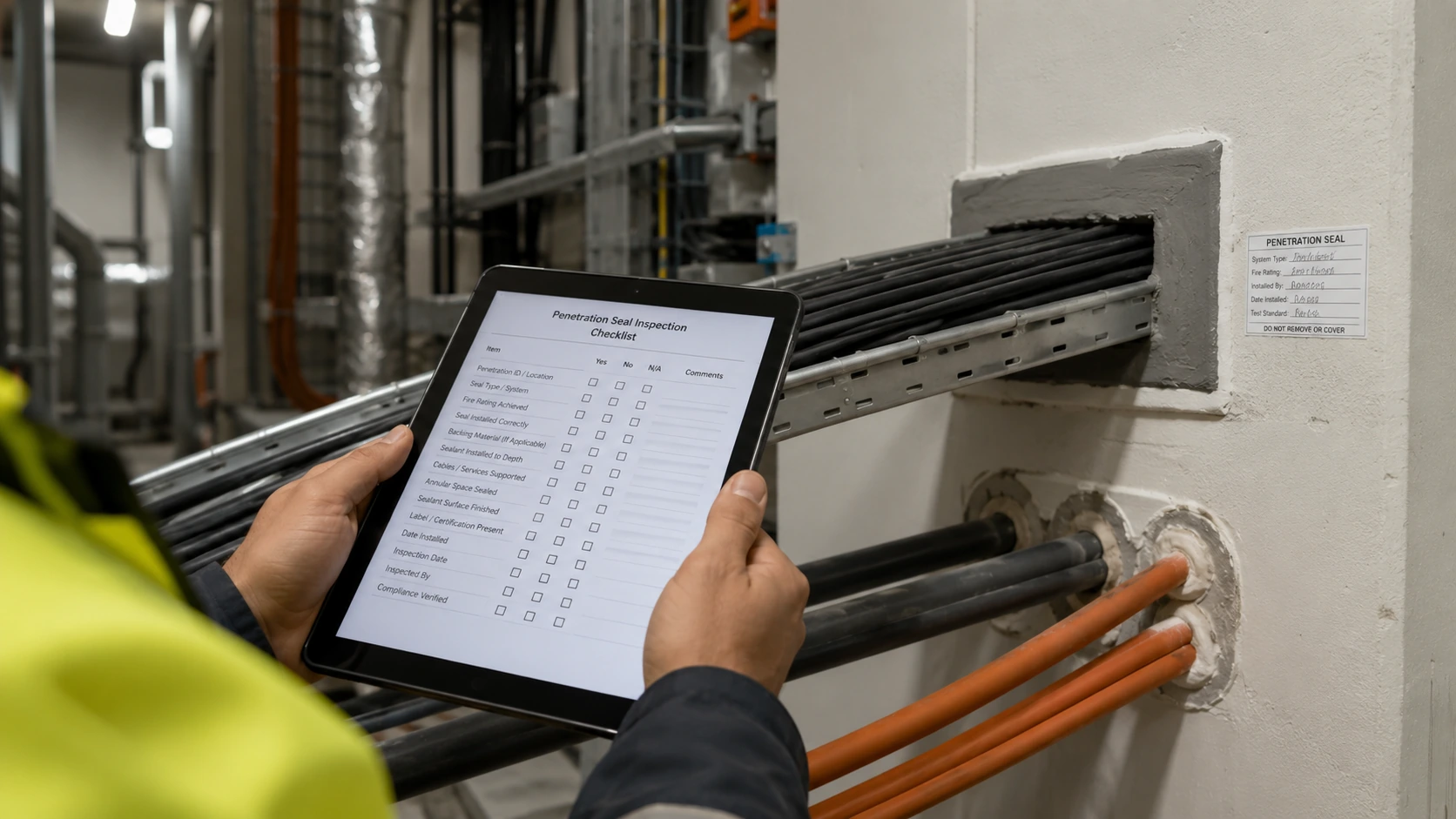
Incomplete or inconsistent service penetration sealing records often lead to costly remedial work, delayed certification and compliance disputes. These gaps may seem minor during construction but can become serious when certifiers, insurers, fire engineers or building managers need to verify performance years later.
One of the most common problems is the absence of a clear link between each penetration and a specific tested fire-stopping system. Records may state that a penetration is “fire sealed” without documenting:
Without this information, certifiers cannot confirm that the installed seal matches the required tested or assessed configuration. This can result in intrusive inspections, additional engineering review or conservative assumptions about the building’s fire performance.
Another common issue is inaccurate as-built location data. Design drawings and service models do not always match final site conditions. If penetration locations are not updated after installation, future inspections and refurbishments become more difficult. Later trades may cut new penetrations rather than locate existing ones, compounding compliance issues over time.
Undocumented variations are also a major problem. Pipe sizes may change, cable bundles may increase and new services may be added late in the programme. Typical gaps include:
These issues are often discovered only when a fire engineer, certifier or fire safety practitioner questions why a seal on site does not match the drawing or documentation provided.
Penetration sealing records only support compliance if they reflect what is actually in the walls, floors and ceilings. Outdated records can undermine confidence in fire resistance levels, acoustic performance and NCC compliance. Updates should therefore be linked to specific trigger events, not left to informal judgement.
The critical rule is that any change affecting penetrations, service routes or fire and smoke compartments should prompt a record review. This applies across commercial offices, residential towers, healthcare facilities, education buildings and industrial sites.
Records should be updated after:
Any work that disturbs an existing fire or acoustic seal should be documented once the work is complete and inspected. This includes minor works as well as major upgrades, because small undocumented changes can accumulate into significant compliance issues over time.
Tenancy churn is a common source of undocumented penetrations in office and mixed-use buildings. Fit-outs often involve ceiling changes, new kitchenettes, bathroom works, communications cabling and plant room modifications. Building owners and facility managers should require as-built penetration schedules and photographic evidence as part of fit-out handover requirements. These records should then be integrated into the central building register rather than left only in separate project files.
Service penetration sealing records are far more than an administrative requirement. They are an important part of building management, passive fire compliance and long-term asset protection. Accurate, accessible documentation provides evidence that penetration seals continue to meet the required performance standards while supporting inspections, maintenance, refurbishments and AFSS obligations.
For building owners, strata managers and facility professionals, maintaining these records should be treated as an ongoing responsibility rather than a one-off project deliverable. With a structured register, clear photographic evidence and traceable system details, it becomes easier to manage future works, reduce compliance risk and protect the integrity of fire-rated building elements over the life of the building.