

AS 1851-2012 for Passive Fire Protection Systems: What Sydney Building Owners Need to Know
July 8, 2026
Maintaining effective passive fire protection in Sydney buildings requires more than a compliant installation. Ongoing inspection, testing and maintenance are essential to ensure fire doors, fire-rated walls, penetration seals, fire dampers and other measures continue to perform as intended throughout a building’s lifecycle. AS 1851-2012 helps support long-term compliance, risk management and occupant safety. IECC recognises that understanding how this standard applies to passive fire protection systems is critical for building owners, strata managers and facility professionals.
This article explains how AS 1851-2012 fits within the broader NSW regulatory framework, how it relates to passive fire protection measures and what building owners need to consider when demonstrating ongoing compliance. It also covers inspection and maintenance expectations, record-keeping requirements and the steps needed to support Annual Fire Safety Statements while reducing the risk of enforcement action and costly rectification.
ƒ
AS 1851-2012 is the Australian Standard for the routine service of fire protection systems and equipment. It sets out how fire safety measures must be inspected, tested, maintained and recorded after installation. For building owners, it provides a structured framework for determining what needs to be checked, how often checks should occur and how the results should be documented.
The standard is often associated with active fire systems, such as sprinklers, hydrants, alarms and smoke control systems. However, it also has important implications for passive fire protection where those measures form part of the building’s essential fire safety measures. This may include fire and smoke doors, fire-rated access panels, dampers, fire-stopping systems and other fire-resisting elements that support compartmentation, egress and smoke control.
AS 1851-2012 is titled “Routine service of fire protection systems and equipment”. It does not deal with the original design or installation of fire protection systems. Instead, it sets out minimum ongoing service requirements for installed systems and equipment, including:
The purpose of the standard is to help ensure fire safety measures remain capable of operating as intended when needed. For building owners and managers, AS 1851-2012 provides a practical benchmark for planning maintenance, briefing contractors and confirming that fire safety records are complete enough to support Annual Fire Safety Statement obligations.
AS 1851-2012 is structured around different types of fire protection systems and equipment. For each relevant system, it identifies:
The standard also places strong emphasis on logbooks, service reports and defect records. These documents should identify the site, asset, inspection date, task completed, results, defects and rectification actions. Accurate records are important because they provide evidence for councils, insurers, certifiers and fire safety practitioners if a building is audited or an incident occurs.
Passive fire protection is designed to slow the spread of fire and smoke through a building. It includes fire-rated walls, floors, doors, service penetrations, fire dampers, smoke seals and other measures that support compartmentation and safe evacuation.
In Sydney, passive fire protection is not only a construction issue. Building owners must ensure that essential fire safety measures continue to be maintained after occupation. From 13 February 2026, NSW building owners of Class 1b and Class 2 to Class 9 buildings are required to have essential fire safety measures inspected and tested in accordance with AS 1851-2012 where the measure is covered by the standard.
Where an essential fire safety measure is not covered by AS 1851-2012, it still needs to be maintained to the standard listed on the building’s Fire Safety Schedule or to the original approved design requirements. This is an important distinction, especially for passive fire systems, where some measures are addressed directly by AS 1851-2012 and others are managed through the Fire Safety Schedule, product approvals, installation details and supporting documentation.
AS 1851-2012 affects a broad range of NSW buildings. The requirement applies to all new and existing Class 1b and Class 2 to Class 9 buildings where essential fire safety measures are installed and must be maintained.
The trigger is not the building’s location in Sydney. It is whether the building has essential fire safety measures that must be inspected, tested and maintained. If a building is required to submit an Annual Fire Safety Statement, AS 1851-2012 is likely to be relevant to at least some of the installed fire safety systems.
AS 1851-2012 commonly affects the following building classes where essential fire safety measures are installed:
In these buildings, passive fire protection often works together with active systems such as sprinklers, detection, alarms, smoke control and emergency warning systems. Maintaining both active and passive measures is important for overall fire safety performance.
AS 1851-2012 generally does not apply to Class 1a stand-alone houses or Class 10 non-habitable structures, such as private garages, sheds and fences, unless those structures form part of a larger building or complex with relevant essential fire safety measures.
For Sydney building owners, the simplest starting point is to review the Fire Safety Schedule. This document identifies the essential fire safety measures that apply to the building and the standard of performance each measure must meet. From there, owners can confirm which measures fall under AS 1851-2012 and which require maintenance under another listed standard or approved design pathway.
AS 1851-2012 should not be treated as a design manual for passive fire protection. It does not replace the National Construction Code, tested fire-stopping systems, fire door approvals or the original construction certification process. Instead, it supports ongoing maintenance by setting out inspection, testing and record-keeping requirements for relevant fire safety measures.
For passive fire protection, this means the focus is on confirming that existing fire-resisting elements remain intact, accessible, functional and documented. The aim is to ensure the fire and smoke separation relied on at approval stage has not been compromised by age, damage, building use, fitouts or later service penetrations.
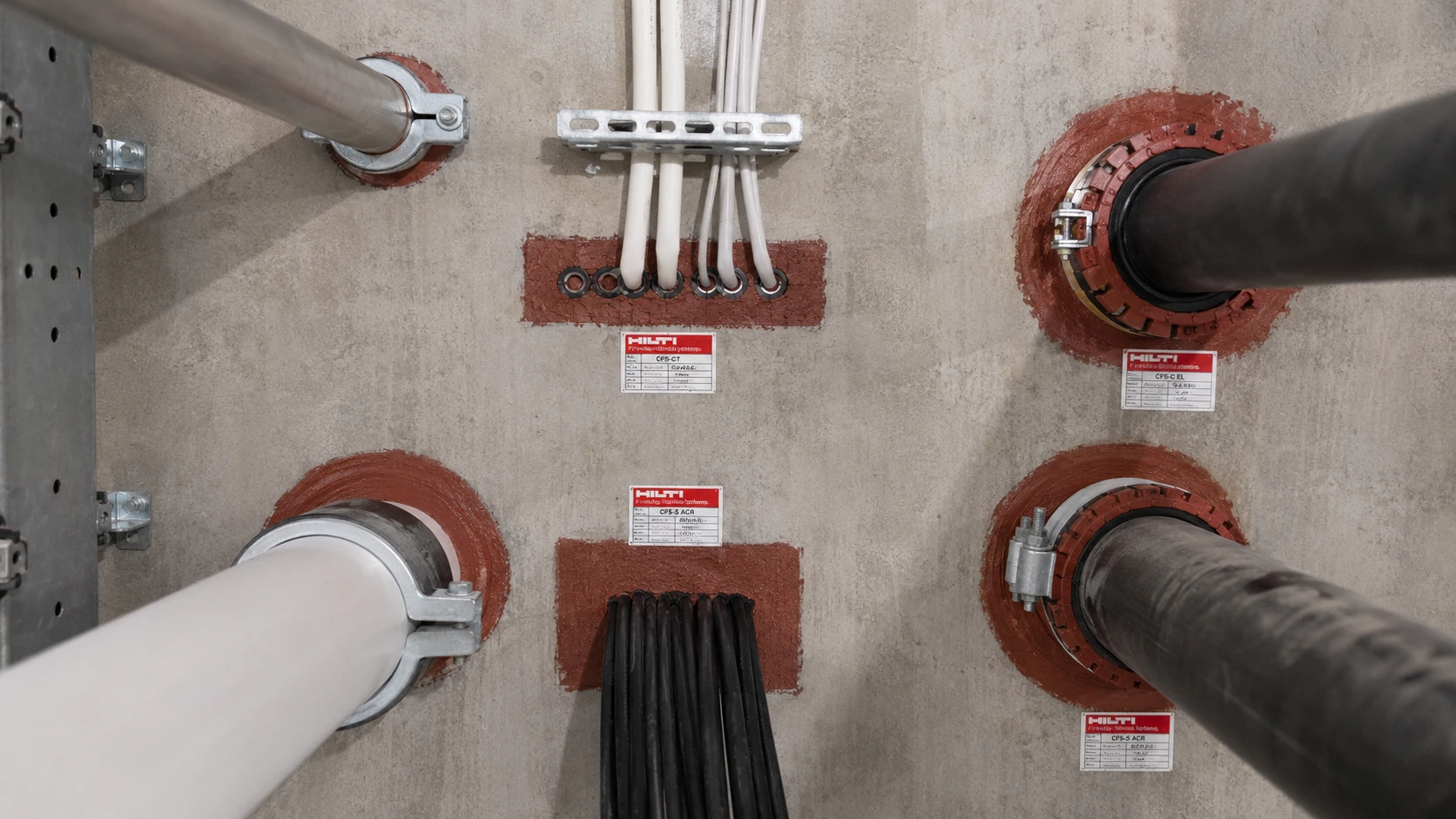
Passive fire protection measures that may require inspection or review include:
Some of these elements are directly addressed by AS 1851-2012. Others may be reviewed as part of broader fire safety maintenance, AFSS preparation or defect management. The exact requirements depend on the building’s Fire Safety Schedule, the installed systems and the applicable performance standard.
Routine inspections for passive fire protection often involve visual checks, functional testing and documentation review. The level of detail depends on the system and the standard listed for that measure.
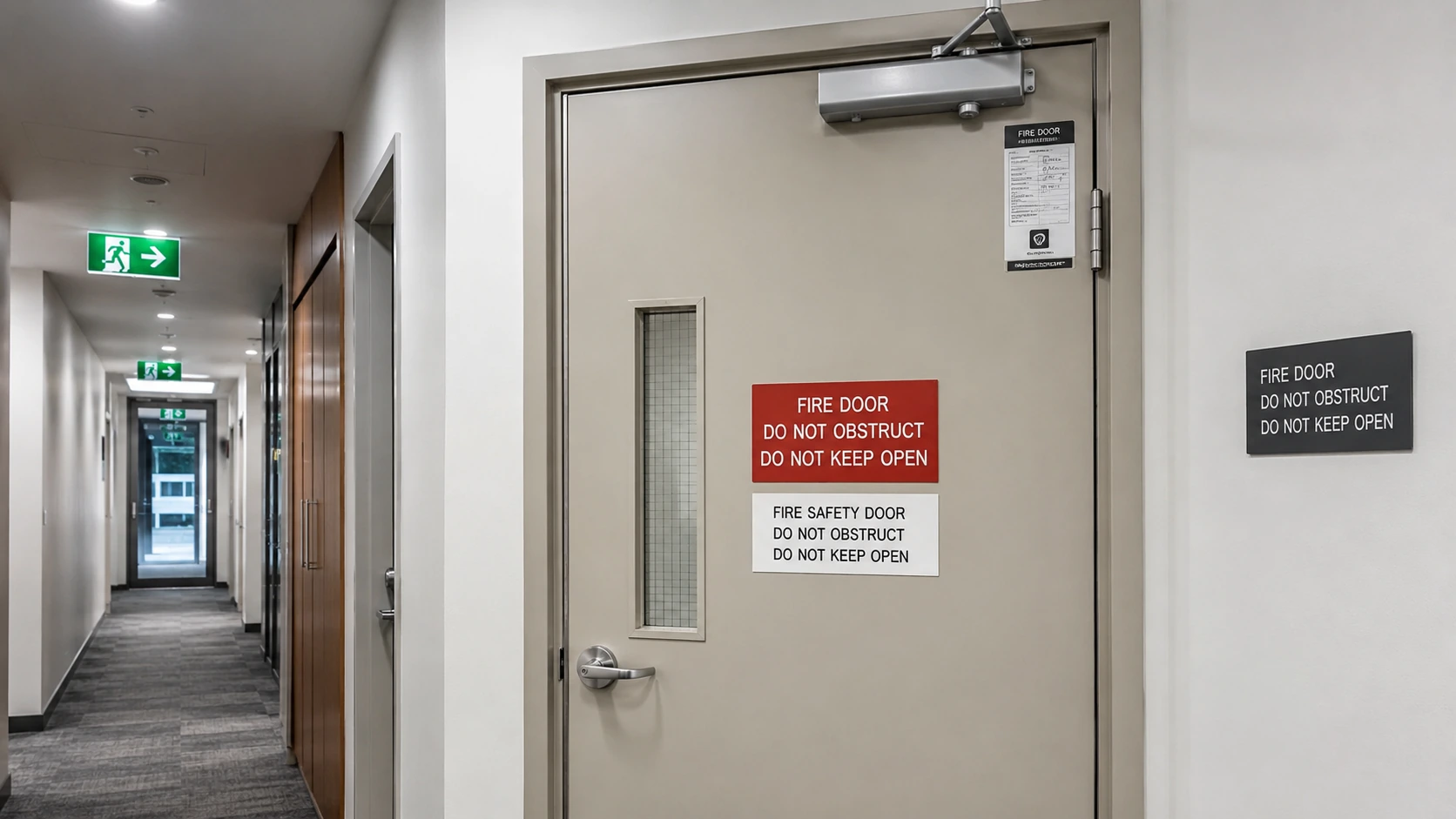
For fire doors, inspections may include checking that the door closes and latches correctly, seals are intact, frames are not damaged, gaps are within acceptable limits and signage or tags are legible. For fire dampers, inspections may involve checking access, blade movement, release mechanisms, obstruction, reset capability and the condition of surrounding fire-rated construction.
For fire-stopping and penetrations, inspections may look for gaps, damaged sealants, missing collars, unapproved materials, undocumented penetrations or services that have been added without reinstating the required fire rating. Where defects are found, they need to be recorded and rectified using suitable tested systems and competent contractors.
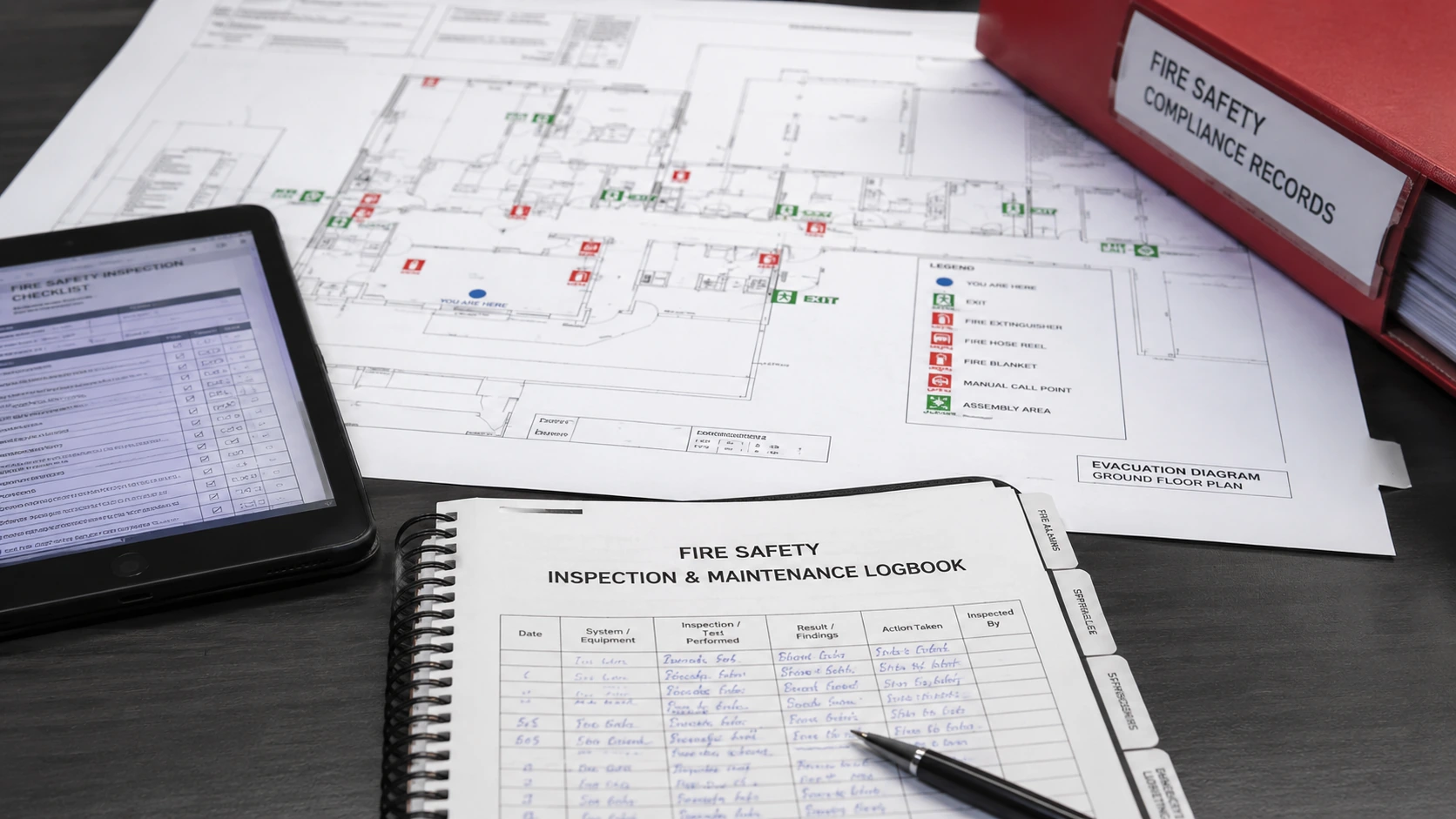
AS 1851-2012 requires maintenance records to show what was inspected, who carried out the work, what defects were identified and what action was taken. These records support the Annual Fire Safety Statement process and provide evidence that the building owner has taken reasonable steps to maintain essential fire safety measures.
For passive fire protection, documentation may include inspection reports, fire door tags, damper test records, fire-stopping details, photographs, marked-up plans and defect registers. A passive fire register can be useful for managing fire-stopping and compartmentation over time, particularly in complex buildings, but it should be treated as good asset management rather than a blanket AS 1851-2012 requirement in every case.
Routine servicing under AS 1851-2012 focuses on checking that fire protection systems and equipment remain operational and capable of performing as intended. For passive fire protection, this usually involves a structured program of inspections, functional checks, defect reporting and rectification.
The goal is not simply to complete paperwork. The purpose is to identify issues before they affect fire safety performance, delay AFSS sign-off or lead to enforcement action.
Routine inspection activities may include checking that:
These checks help identify defects caused by daily use, tenancy changes, maintenance work, building movement or unauthorised alterations.
Maintenance and rectification may include:
Any rectification work should be carried out using products and methods suitable for the original fire-resistance requirements. Poorly selected materials, undocumented repairs or temporary fixes can create further compliance issues.
Passive fire protection is only as reliable as the inspection and maintenance process that supports it. Without accurate documentation, it can be difficult to demonstrate that fire doors, dampers, walls, shafts and service penetrations remain capable of performing as intended.
In NSW, Annual Fire Safety Statements require confirmation that the essential fire safety measures listed for a building have been assessed and are capable of performing to the required standard. Incomplete, inconsistent or missing records can delay certification and increase the risk of council action, insurance scrutiny or costly rectification.
The Annual Fire Safety Statement is the formal declaration submitted each year to the local council. It confirms that the building’s essential fire safety measures have been assessed by an appropriately qualified practitioner and are capable of performing to the standard listed on the Fire Safety Schedule.
Where AS 1851-2012 applies, logbooks, inspection reports, defect records and rectification evidence help support this process. If records are incomplete, the practitioner may not have enough evidence to confirm compliance.
This can lead to:
A structured maintenance process helps reduce these risks by creating a clear evidence trail throughout the year, rather than leaving compliance issues to be addressed close to the AFSS due date.
If a fire, audit or dispute occurs, attention often turns to what was maintained, what was known and what was documented before the incident. Records showing regular inspection, defect reporting and rectification can help demonstrate that the building owner took reasonable steps to manage fire safety obligations.
Poor records can create the opposite impression. Handwritten notes, missing dates, unclear photographs, undocumented repairs or incomplete contractor reports can make it difficult to prove that passive fire protection was properly maintained. Even where physical systems are mostly intact, weak documentation can undermine a building owner’s position during regulatory, insurance or legal review.
Good records also support better asset management. Over time, inspection reports can reveal recurring problems in particular areas of a building. For example, fire doors on one level may repeatedly fail to latch, or service risers may regularly contain unsealed penetrations after cabling upgrades.
Identifying these patterns allows owners and facility managers to plan maintenance budgets more effectively. It also helps reduce the risk of hidden defects remaining undetected until an audit, refurbishment, AFSS deadline or emergency event.
Many passive fire defects develop gradually through everyday building use. Others are caused by fitouts, service upgrades, poor repairs or a lack of clear maintenance responsibility. AS 1851-2012 and the broader NSW fire safety framework require building owners to identify and address these issues before they compromise fire safety performance.
Recognising common defect areas can help owners, strata managers and facility teams prevent avoidable non-compliance.
Fire-rated walls, floors and shafts are often compromised when new services are installed. Cabling, pipework, ductwork and data upgrades can create openings that reduce the fire-resistance level of the building element.
Common issues include:
Even small openings can allow smoke, heat or fire to spread between compartments. Any penetration through a fire-rated element should be sealed using a suitable tested system and recorded so it can be checked during future inspections.
Fire doors are one of the most visible passive fire measures, but they are also among the most commonly damaged or altered. Non-compliance may arise when:
A fire door that does not close and latch correctly may not protect the compartment it was designed to serve. Routine inspection helps identify these issues before they affect AFSS compliance or occupant safety.
Passive fire protection can be difficult to maintain if systems are concealed, inaccessible or poorly documented. Common issues include:
When access and documentation are poor, it becomes difficult to confirm that passive fire systems remain intact. Clear labelling, updated plans and accessible records help contractors, practitioners and building managers inspect systems properly and avoid accidental damage during future works.
AS 1851-2012 provides an important framework for maintaining fire protection systems and equipment after construction is complete. For Sydney building owners, its relevance to passive fire protection lies in how it supports routine inspection, testing, defect management and documentation. By maintaining accurate records, addressing defects promptly and understanding how each passive fire measure is listed on the Fire Safety Schedule, owners can better support AFSS compliance, protect occupants and reduce long-term regulatory and financial risk.