

Fire Damper Inspection and Maintenance Requirements in NSW
September 2, 2026
Fire dampers are often concealed within ceilings, walls and ductwork, yet they play a role in containing fire and smoke and protecting occupants. Without proper inspection and maintenance, they may fail to operate when needed, compromising fire safety, compartmentation and compliance. In NSW, building owners and facility managers need to understand the requirements for keeping these critical systems in reliable working condition.
IECC supports the inspection, maintenance and management of passive fire protection systems. Its approach focuses on identifying defects early, addressing issues promptly and helping ensure fire dampers continue to perform as intended throughout the life of a building.
Understanding how often fire dampers should be inspected, what is checked and how defects should be managed can help reduce safety risks and costly rectification. Working with a qualified passive fire specialist can also provide professional guidance for maintaining fire damper performance and meeting relevant requirements.
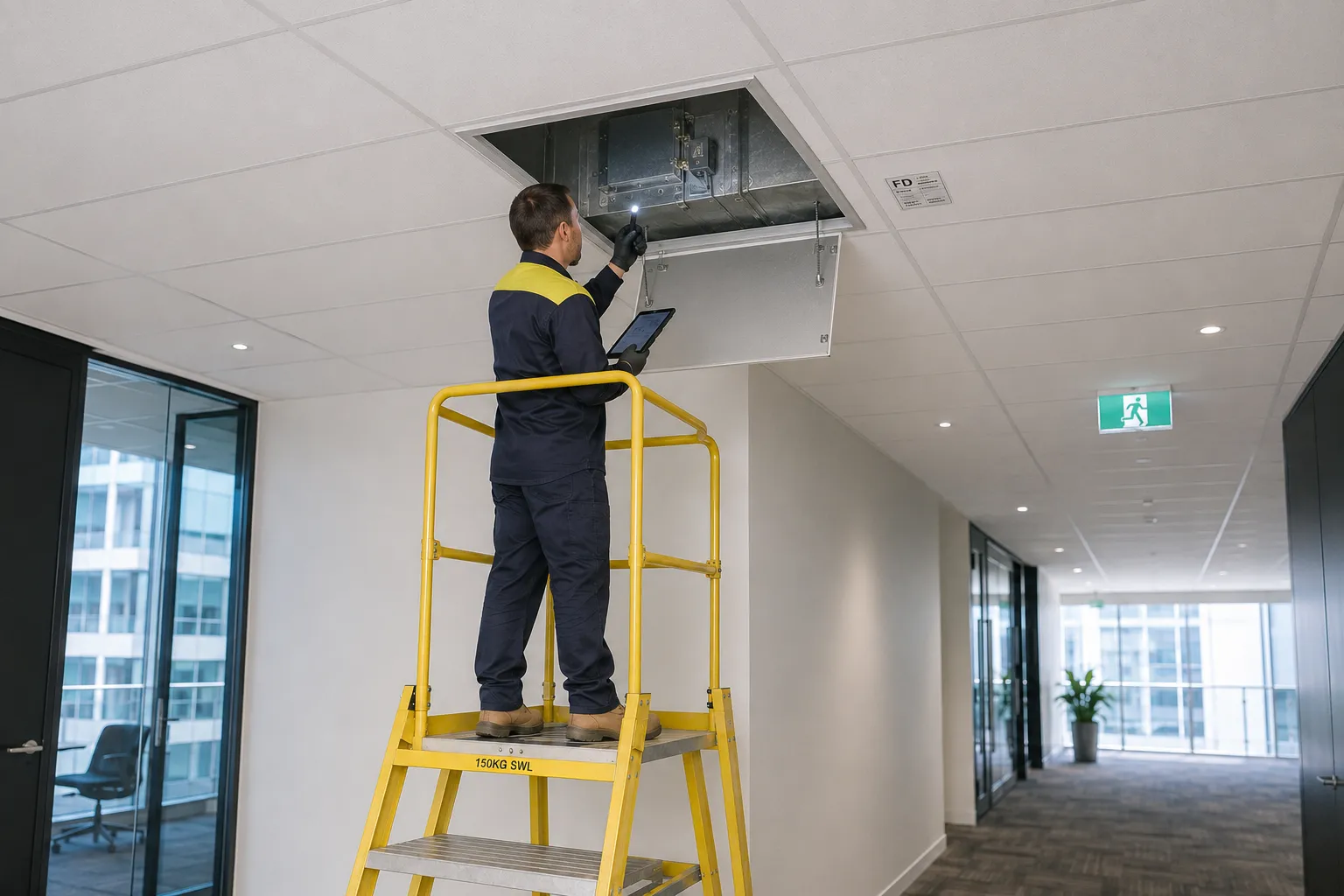
Fire dampers help contain fire and smoke within a building, making regular inspection and maintenance part of fire safety. Because they are often concealed within ductwork, ceilings and fire-rated walls, defects can remain unnoticed until an emergency. Routine testing helps confirm that each damper can close correctly and perform its intended safety function.
Without regular maintenance, dampers can become blocked by dust and debris, corroded by moisture or damaged during building works. Issues such as misaligned blades, failed release mechanisms or physical obstructions can prevent full closure, allowing smoke and hot gases to travel through ductwork and compromise fire compartments and evacuation routes.
Understanding how passive fire defects affect active fire systems is also important because failed dampers and compromised compartmentation can place additional pressure on smoke-control, detection and suppression systems.
Fire dampers help maintain separation between fire compartments by restricting the movement of fire and smoke through ductwork and penetrations. If a damper fails to close fully, smoke can spread into areas intended to remain protected, affecting evacuation and firefighter access.
Fire dampers may form part of a building's essential fire safety measures and must be inspected, tested and maintained in accordance with applicable requirements, including the building's Fire Safety Schedule (FSS) and relevant provisions of AS 1851.
Regular maintenance helps building owners:
NSW Planning provides further information about annual fire safety statements and fire safety schedules, including their purpose, standard forms and relationship with essential fire safety measures.
Neglecting required maintenance can leave a building exposed to compliance issues, increased liability and greater risk if a fire occurs.
Fire dampers can deteriorate due to dust, moisture, corrosion, vibration and nearby construction or maintenance work. Common problems include damaged components, faulty release mechanisms, blocked dampers and inaccessible access panels.
Regular inspection allows these issues to be identified and addressed before they affect performance. Keeping dampers accessible, clean and operational helps preserve the building's passive fire protection system and reduce the likelihood of unexpected failures.
AS 1851-2012 provides the inspection, testing and maintenance framework for fire dampers where the standard applies. These requirements work alongside the applicable FSS, the National Construction Code (NCC) and other relevant fire safety obligations.
Building owners can review the AS 1851-2012 maintenance requirements that support routine inspections, defect management, record-keeping and ongoing passive fire compliance.
The purpose of routine maintenance is to ensure fire dampers remain accessible, in suitable condition and capable of operating as intended during a fire. Maintenance should be carried out by appropriately competent personnel, with defects recorded, rectified and re-tested where required.
Fire dampers are subject to 12-monthly inspection and testing under AS 1851-2012. However, the applicable requirements can depend on the building, Fire Safety Schedule, system design and other relevant documentation.
Additional inspection may be appropriate where dampers are damaged, exposed to harsh conditions or affected by building or HVAC works.
Routine maintenance may include:
Any defect that prevents a damper from operating as intended should be recorded and appropriately rectified. Where required, the damper should then be re-tested to confirm satisfactory operation.
Accurate records should also be maintained for each damper, including its identification, location, inspection date, test result, defects, maintenance performed and rectification completed. This provides a clear maintenance history and supports compliance.
Fire dampers should be inspected and tested at the intervals specified by AS 1851-2012 and the building's applicable fire safety documentation. For many buildings, this involves 12-monthly inspection and testing.
However, building owners should not wait for the next annual inspection if a damper has been damaged, modified or affected by surrounding building works.
Additional inspection or testing may be appropriate after:
Routine inspections should be scheduled well before the Annual Fire Safety Statement (AFSS) deadline. This gives building owners and facility managers time to identify defects, arrange rectification and complete any required re-testing without creating unnecessary last-minute pressure.
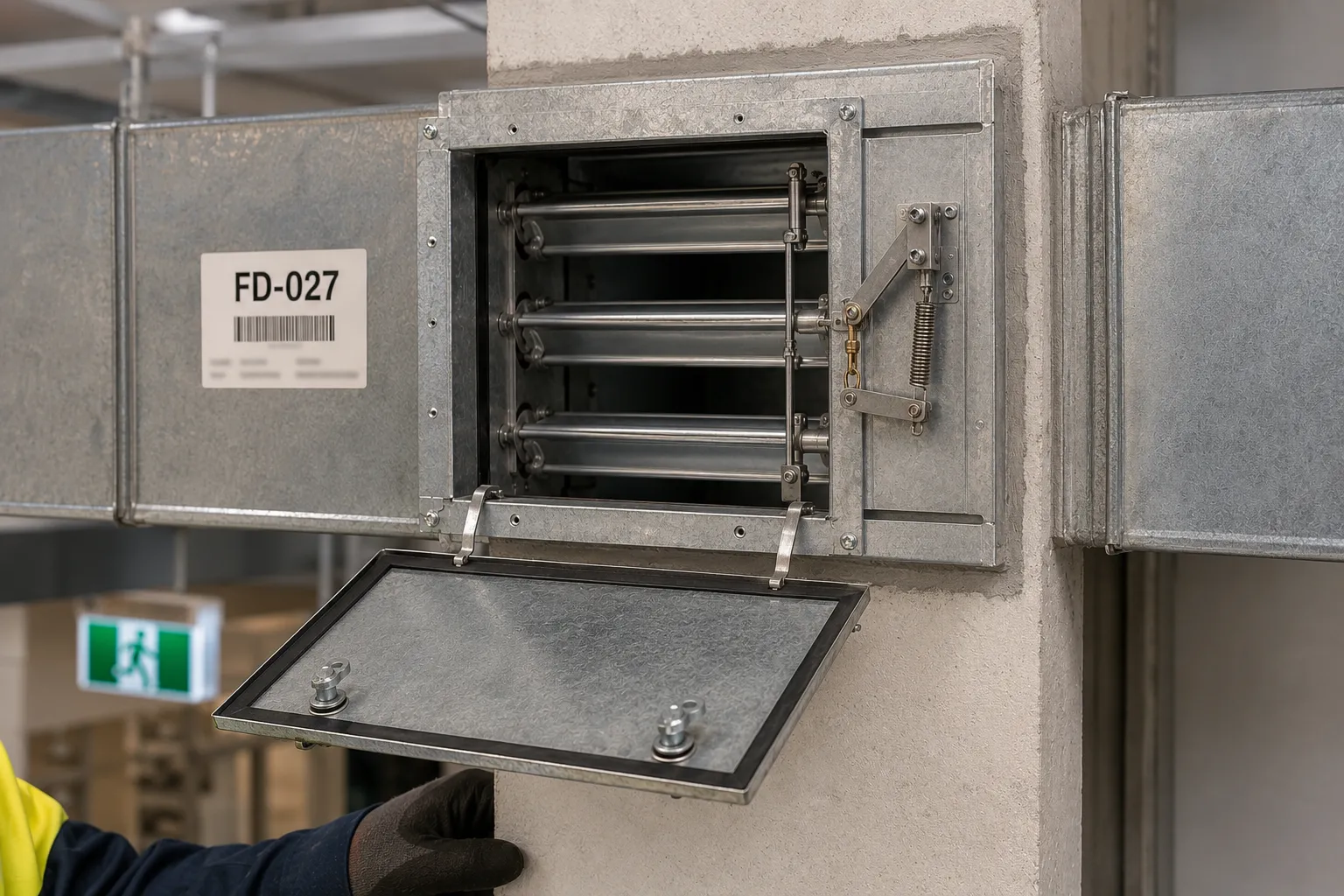
A fire damper inspection is designed to confirm that each damper is accessible, in suitable condition and capable of operating as intended. The inspection may cover the damper itself, its release mechanism, surrounding fire-rated construction and nearby services that could affect performance.
Depending on the damper type and installation, checks may include the following:
Any defect that could affect damper operation or the surrounding fire-rated construction should be recorded for appropriate rectification. Where repairs are required, the affected damper should be re-tested as necessary to confirm satisfactory performance.
Because fire dampers are often concealed, problems may not be obvious during everyday building use. However, certain physical and operational issues can indicate that inspection or maintenance is required.
Beware of these warning signs:
Suspected defects should be recorded and addressed promptly rather than left until the next scheduled inspection. Where specialist assessment or rectification is required, an appropriately qualified professional can determine the corrective action and whether re-testing is necessary.
A failed fire damper should be addressed promptly because it may no longer provide the required fire and smoke protection. The response will depend on the nature of the defect, but the process involves three steps.
The inspection report should identify the affected damper, describe the defect and record any relevant observations. Common failures include damaged components, restricted movement, faulty release mechanisms, obstructions and inadequate access.
Defects that affect the damper's fire safety function should be prioritised rather than carried forward to the next scheduled inspection.
The appropriate repair depends on the cause of the failure. Rectification may involve:
Work should be completed by appropriately competent personnel and in accordance with applicable standards, manufacturer requirements and the building's fire safety documentation.
A repaired or replaced damper should be re-tested where required to confirm that it operates correctly and closes fully. The outcome should then be recorded against the damper's maintenance history.
Building owners should retain the defect report, rectification details and re-test results. If the defect affected surrounding fire-rated construction or other passive fire protection measures, further specialist assessment may also be required.
The building owner or person responsible for the premises has the primary duty to ensure fire dampers are inspected, tested and maintained as required. Facility managers, strata managers and specialist contractors may coordinate or perform the work, but engaging a contractor does not remove the owner's overall responsibility for maintaining essential fire safety measures.
NSW Government guidance explains the responsibilities of building owners under AS 1851-2012, including arranging inspection and testing, using competent personnel and retaining prescribed maintenance records for at least seven years.
The responsible person should ensure that fire dampers:
For strata properties, this responsibility will generally sit with the owners corporation. Lease arrangements may allocate certain maintenance tasks to tenants, but they do not necessarily remove the building owner's statutory responsibilities.
Facility, building and strata managers coordinate the practical maintenance programme. This may include arranging inspections, providing access to dampers, tracking defects and following up on recommended repairs.
Fire safety and HVAC contractors carry out the technical inspection, testing and maintenance work. They should document results, identify defects and recommend appropriate rectification. The building owner or responsible person must then ensure those recommendations are appropriately addressed and recorded.
Clear responsibilities between owners, managers, tenants and contractors can help prevent missed inspections, unresolved defects and gaps in fire safety management.
Maintaining compliance between formal inspections requires ongoing attention to access, building modifications and identified defects. Building owners and facility managers can help maintain reliable damper performance by:
Where building work has disturbed a fire-rated barrier or there is uncertainty about a damper's condition, professional assessment should be obtained rather than assuming the system remains compliant.
A proactive maintenance approach helps identify problems earlier, maintain accurate records and reduce the risk of defects developing between formal inspections.
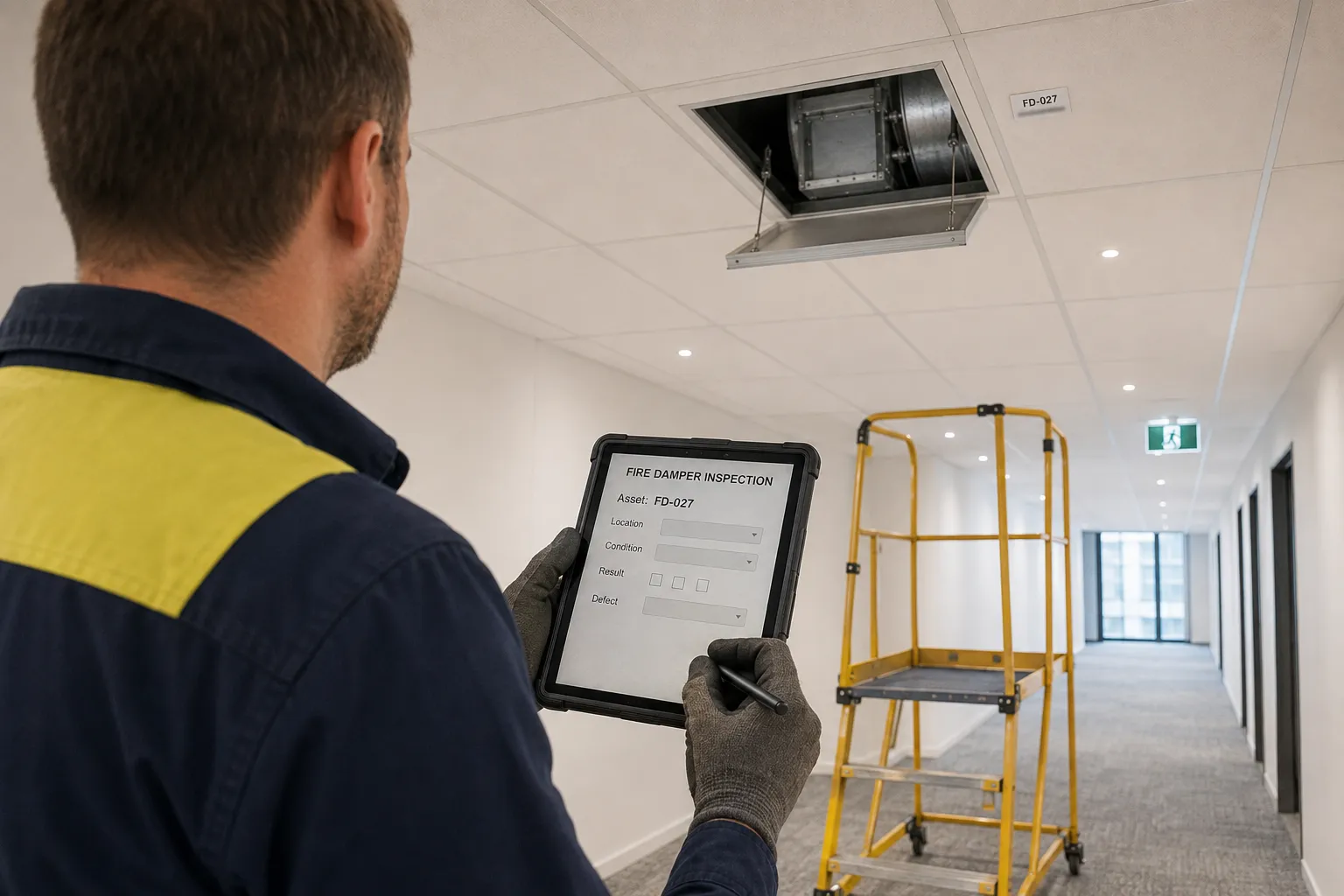
Accurate fire damper records help demonstrate that essential fire safety measures are being inspected, maintained and appropriately managed. Records should provide a clear history of each damper, including its location, inspection results, defects and any repair or replacement work.
A current fire damper register should identify every damper and link it to relevant drawings, inspection reports and maintenance history.
Records should include:
Drawings and asset registers should also be updated when dampers are affected by refurbishment, HVAC changes or other building works.
Defects should be tracked from the initial inspection through to rectification and, where required, re-testing.
A useful defect record should include:
Commissioning documents, product information and relevant approvals should also be retained for new or replacement dampers.
Maintaining complete and up-to-date records makes future inspections more efficient and provides useful evidence of ongoing fire safety management.
Fire damper inspection and maintenance is an important part of protecting occupants, maintaining fire compartmentation and meeting ongoing fire safety obligations. Regular testing, timely rectification and accurate records help ensure these critical systems remain reliable and capable of performing as intended during an emergency.
IECC helps building owners and facility managers take a proactive approach to passive fire protection, from identifying fire damper defects to supporting appropriate maintenance and rectification. Treating fire damper maintenance as an ongoing responsibility rather than an annual compliance exercise can help reduce risks, support safer buildings and preserve the performance of essential fire safety systems.