

How Often Should Fire Doors Be Inspected in NSW?
September 2, 2026
Fire doors are a vital part of fire safety, but they cannot be treated as fit-and-forget assets. Regular inspections and maintenance help ensure they remain compliant and perform as intended during an emergency, protecting occupants and the building.
Understanding how often fire doors must be inspected is essential for meeting safety and compliance obligations. Inspection frequency can depend on the building, its fire safety measures and the applicable requirements, while damage, heavy use or identified defects may require additional checks. Effective passive fire protection in Sydney also depends on keeping fire doors and other protective systems in reliable condition.
IECC helps maintain effective fire safety measures through the inspection and upkeep of critical passive fire protection systems. Understanding inspection requirements, common defects and maintenance responsibilities can help keep fire doors compliant, functional and ready when they are needed most.
Fire doors are important life safety measures and must be inspected and maintained in accordance with the requirements that apply to the building and its fire safety measures. AS 1851:2012 provides routine servicing requirements for fire protection systems and equipment where it applies, while other requirements may arise under the Environmental Planning and Assessment Regulation 2021, the National Construction Code (NCC) and the building's Fire Safety Schedule (FSS).
NSW Government guidance on building fire safety requirements under AS 1851-2012 explains the inspection, testing and maintenance obligations that apply to essential fire safety measures in relevant NSW buildings.
Building owners and managers are responsible for ensuring required inspections are arranged, defects are addressed and appropriate records are maintained.
Where AS 1851 applies, fire doors are subject to routine inspection at intervals of no more than six months. These inspections help confirm that the door remains in suitable condition and can operate as intended.
Building owners can review the AS 1851-2012 maintenance requirements for more information about routine servicing, documentation, defect reporting and rectification of passive fire systems.
Routine checks cover:
Buildings or areas subject to heavy use, impact or recurring defects may also benefit from additional visual checks between formal inspections.
Where fire doors are identified as essential fire safety measures on a building's FSS, they form part of the building's broader annual fire safety assessment and certification process. The specific assessment and certification requirements depend on the building and applicable regulations.
NSW Government information about annual fire safety statement requirements explains how applicable fire safety measures must be assessed and verified as part of the annual certification process.
Building owners should ensure required assessments are completed by appropriately competent practitioners and retain records of inspections, defects and rectification work. This provides evidence that identified fire safety measures are being properly maintained and managed.
The scheduled inspection interval should not be treated as a reason to ignore problems between inspections. Additional checks may be appropriate when a door experiences heavy traffic, impact, misuse or recurring faults.
Signs that a fire door may need attention sooner include:
Prompt attention can prevent minor defects from developing into more significant safety or compliance issues.
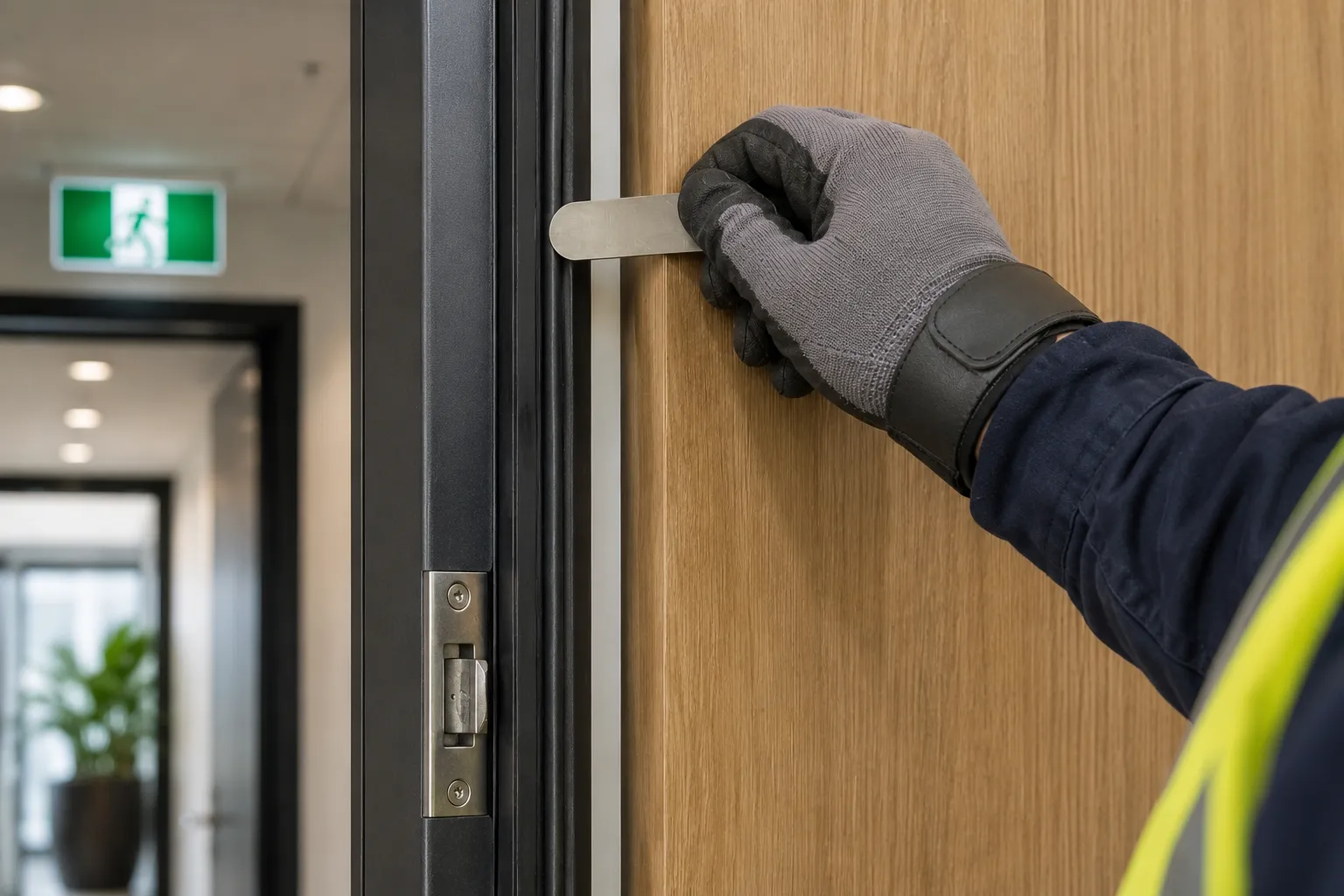
A fire door inspection assesses the complete door assembly rather than the door leaf alone. A competent inspector examines the condition, operation and compatibility of the door and its components against the applicable requirements and, where relevant, its approved or tested configuration.
The inspection covers the door leaf, frame, hardware, seals, clearances, glazing and surrounding area. Check the following:
A fire door relies on its components working together to provide effective fire and smoke protection. A damaged seal, faulty closer, excessive clearance or unsuitable hardware can affect performance even when the door leaf appears to be in good condition. Assessing the complete assembly provides a more reliable indication of whether the door remains suitable for its intended purpose.
Fire door assessments should also form part of broader passive fire compliance checks covering fire-rated barriers, service penetrations, compartmentation and supporting compliance records.
Fire doors should be inspected by suitably qualified and competent professionals with specific knowledge of fire door systems and passive fire protection. A general maintenance worker or handyman should not be relied upon for a formal compliance assessment unless they independently meet the applicable competency requirements.
Where a competent fire safety practitioner is required, the person carrying out the assessment should have appropriate qualifications, relevant experience and current knowledge of the applicable NSW requirements and standards.
The consideration is whether the practitioner has the knowledge and experience needed to properly assess the fire safety measure, rather than simply relying on their job title.
Depending on the building and its requirements, inspections may be carried out by specialist passive fire protection contractors, fire protection companies or other qualified professionals with relevant fire door experience. Fire engineers and building surveyors may also be involved where a building has complex fire safety arrangements or performance solutions.
Building managers and maintenance staff can perform basic checks for visible damage or obstruction, but formal compliance assessments should be completed by an appropriately competent practitioner.
Before engaging an inspector, building owners should confirm their relevant qualifications, fire door experience and appropriate insurance. Inspection reports should clearly identify the doors assessed, defects found, recommended rectification and inspection date so that the results can be properly tracked.
Fire door inspections can identify defects that affect a door's ability to contain fire and smoke or operate correctly. Addressing these issues early allows building owners, managers and strata committees to arrange appropriate repairs before problems become more serious.
Understanding why fire doors fail compliance checks can help building owners recognise recurring problems involving gaps, seals, hardware, certification and unauthorised modifications.
Beware of these problems:
A fire door can also be affected by everyday use. Wedges, hooks, door stops, furniture or stored items can prevent it from closing properly, while missing or incorrect signage can create another compliance issue.
Repairs and replacement components should be appropriate for the particular door assembly and completed in accordance with applicable requirements. Improvised repairs or unauthorised modifications should be avoided.
A fire door may need to be assessed before its next scheduled inspection if damage, building work or changes to the door have affected its ability to close, latch or maintain the fire barrier. Recognising these warning signs early can help prevent minor defects from becoming more serious safety or compliance concerns.
Building owners and managers should arrange an assessment if:
A prompt assessment can establish whether the issue requires adjustment, repair or replacement rather than waiting for the next scheduled service.
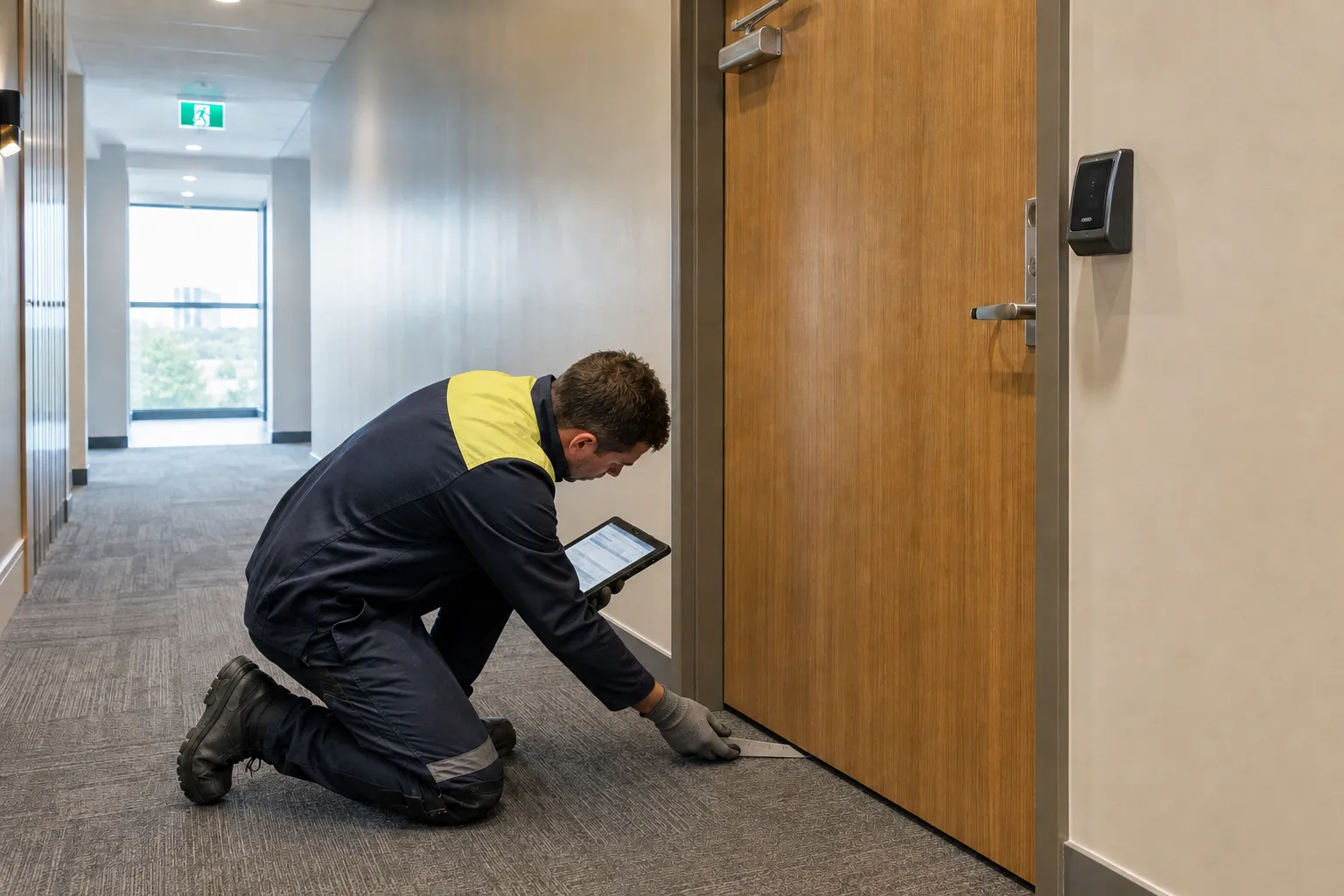
Yes. Fire doors should be reassessed after repairs, alterations or building work that could affect their operation, fire resistance or approved configuration. Because fire doors function as complete assemblies, changes to hardware, seals, glazing or the surrounding wall and frame can affect their performance.
Building work can also alter door clearances, frame fixings or the surrounding fire-resisting construction. Changes to flooring, electrical work, cabling or walls may introduce gaps or penetrations that require attention. Modifications should therefore be assessed against the applicable requirements and manufacturer information rather than assumed to be acceptable.
A post-work inspection should be arranged where there is a reasonable possibility that the door's performance has been affected. This helps maintain the integrity of the overall fire safety system and ensures any identified defects are properly addressed and documented.
If a fire door fails an inspection, the identified defects should be addressed promptly to restore its required performance. Common reasons for failure include damaged or modified door leaves, excessive gaps, faulty closers or latches, damaged seals and unsuitable hardware.
The appropriate rectification depends on the defect. Minor issues may be resolved by adjusting or replacing individual components, while damage or unauthorised modifications may require replacement of the door or complete assembly.
Repairs should be carried out by a suitably competent person using components appropriate for the door assembly. Once work is completed, the door should be checked or re-inspected as appropriate to confirm that the identified defect has been addressed.
A failed fire door should not simply be recorded and left unresolved. Where a defect affects its ability to close, latch or provide the required fire and smoke protection, appropriate interim risk controls may be needed until rectification is completed.
Unresolved defects can contribute to compliance problems and increase liability if the door fails to perform during a fire. Prompt rectification and accurate records help demonstrate that identified issues have been appropriately managed.
Accurate records help demonstrate that fire doors are being properly inspected, maintained and managed. They also provide useful evidence for fire safety practitioners, insurers and regulators when verifying compliance or reviewing defects.
For each fire door, records should identify the inspection date, door location or identification number, inspector details, findings and defects identified. They should also record required repairs, the date work was completed and, where applicable, confirmation that defects were rectified and the door re-inspected.
A central fire door register can make this information easier to manage in larger buildings or property portfolios.
Owners should retain documentation supporting the door's fire rating and approved configuration where available and relevant. This may include fire test or assessment reports, manufacturer information, installation records and relevant certification.
Changes to hardware, glazing, seals or other components should also be documented where they affect the door assembly, with supporting evidence where required.
Records should be organised, securely stored and readily accessible for required compliance checks, annual fire safety processes or insurance purposes. Consistent digital records with appropriate backups can help ensure inspection and rectification information remains available when needed.
Regular inspections are essential, but building owners and managers also have an important role between scheduled checks. Simple monitoring and good maintenance practices can help identify problems early.
Building owners and managers can help maintain fire doors by:
These practices do not replace formal inspections, but they can help preserve the condition and performance of critical fire safety measures between scheduled services.
Understanding how often fire doors should be inspected in NSW goes beyond compliance. Regular inspections, prompt repairs and accurate records help protect occupants, reduce risk and ensure fire doors remain capable of performing their intended function during an emergency.
IECC supports property owners and managers in maintaining effective passive fire safety systems through proper fire door inspection and maintenance. By combining scheduled assessments with responsible day-to-day management, building owners can help keep fire doors compliant, reliable and ready when they are needed most.